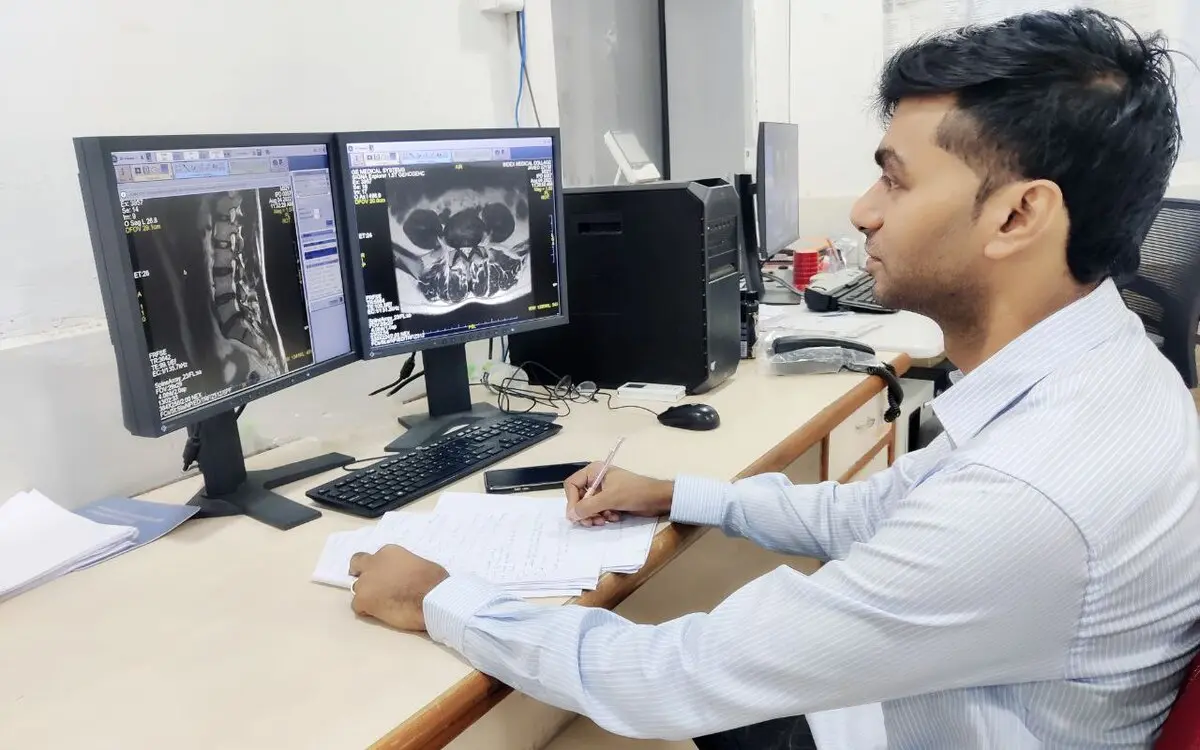
Often, yes, but not for every scan. A second read is most worth it when the result will drive a big decision, when the report is uncertain, or when it does not match how you feel. For a routine scan with a clear result that fits your symptoms, it usually is not needed. Here is how to tell which side you are on.
When a second opinion is usually worth it
Think of a second quote on a car repair: almost nobody gets one for an oil change, and most people do before replacing an engine. The more that rides on a scan, the more a second pair of eyes is worth. It tends to pay off when:
- The result could lead to surgery, a biopsy (a small tissue sample taken for testing), chemotherapy or another major treatment
- The report uses uncertain wording, such as "indeterminate" (not clearly harmless or harmful) or "cannot be excluded" (the scan cannot rule something out)
- The report does not match your symptoms, or you were told the scan is normal while the problem continues
- The condition is rare or complex, or the scan covers an area that rewards a specialist's eye, such as the brain, spine or a joint
- Two reports on the same scan disagree
Who reads the scan matters too. A subspecialist (a radiologist who reads one body area all day, such as the brain or the knee) is more likely to recognize a subtle pattern than a generalist covering every body part in one shift. See when a second radiological opinion makes sense for more examples.
When you can usually skip it
If the report is clear, matches your symptoms and the next step is already obvious, another read adds little. Think of a CT that plainly shows a kidney stone, or a routine follow-up scan of something long known to be stable. A normal result is usually right, too (see what "no acute findings" really means). And in an emergency, such as a head injury or sudden severe pain, treatment comes first. A second read can wait; the care should not.
What a second read can and cannot do
Often the second radiologist broadly agrees with the first, which is a useful result in itself: you go ahead with more confidence. Sometimes the second read adds detail, a clearer measurement or a point worth raising with your doctor. Differences in wording are common and are not automatically a mistake (see can two radiologists interpret the same scan differently), so take both reports to your doctor and ask whether anything changes your care.
A second read helps because of volume and time, not carelessness: a scan can run to hundreds of images, and the first read is built around the question the doctor asked (see can radiologists miss things on MRI or CT scans). What it cannot do is examine you, know your history or decide your treatment; that stays with your own doctor.
How to get one that is actually useful
- Get the images themselves, not only the typed report
- Choose a radiologist who subspecializes in your scan's body area
- Ask for a written, structured report (set headings for each area, ending in a clear conclusion) that you can hand to your own doctor
- Check that you can ask questions afterward
At DocOrbit, an online radiology second opinion follows that outline: a subspecialist radiologist goes through the actual images and writes a structured report within 24 to 48 hours, and you can message the radiologist afterward. It adds one more read and says nothing about whether the first was right or wrong. If you want an answer in minutes instead, Orbius, DocOrbit's AI radiology agent, is a separate option that writes its own report from your scan.
Do I need my scan images, or is the report enough?
You need the images. A radiologist cannot re-read a typed report; they have to look at the scan itself. Ask the hospital or imaging center for the images in DICOM format (the file type scanners save in), usually on a disc or as a download from the patient portal, along with the report.
Will my own doctor take a second opinion into account?
Usually, yes. Doctors are used to patients bringing in outside reports, and the most useful step is to share the new report with the doctor who ordered the scan and knows your history. A second opinion informs that conversation; it does not replace it.
Can I get a second opinion on my MRI or CT scan online?
Yes. You upload your images from home, with no CD to post and no second trip, and a subspecialist radiologist re-reads the study and writes a structured report you can hand to your own doctor within 24 to 48 hours. You can message the radiologist with questions afterward. If you would rather have an answer in minutes, Orbius, DocOrbit's AI radiology agent, is a separate option that writes its own report.
Key takeaways
- A second opinion is most worth it when a big decision rides on the scan, the report is uncertain, or it does not match how you feel
- For a clear, routine result that fits your symptoms it is usually not needed, and in an emergency treatment comes first
- Get it from a subspecialist working from the actual images, and share the result with your own doctor
This article is for general information only and is not medical advice. Always discuss your imaging results and any next steps with a qualified physician.