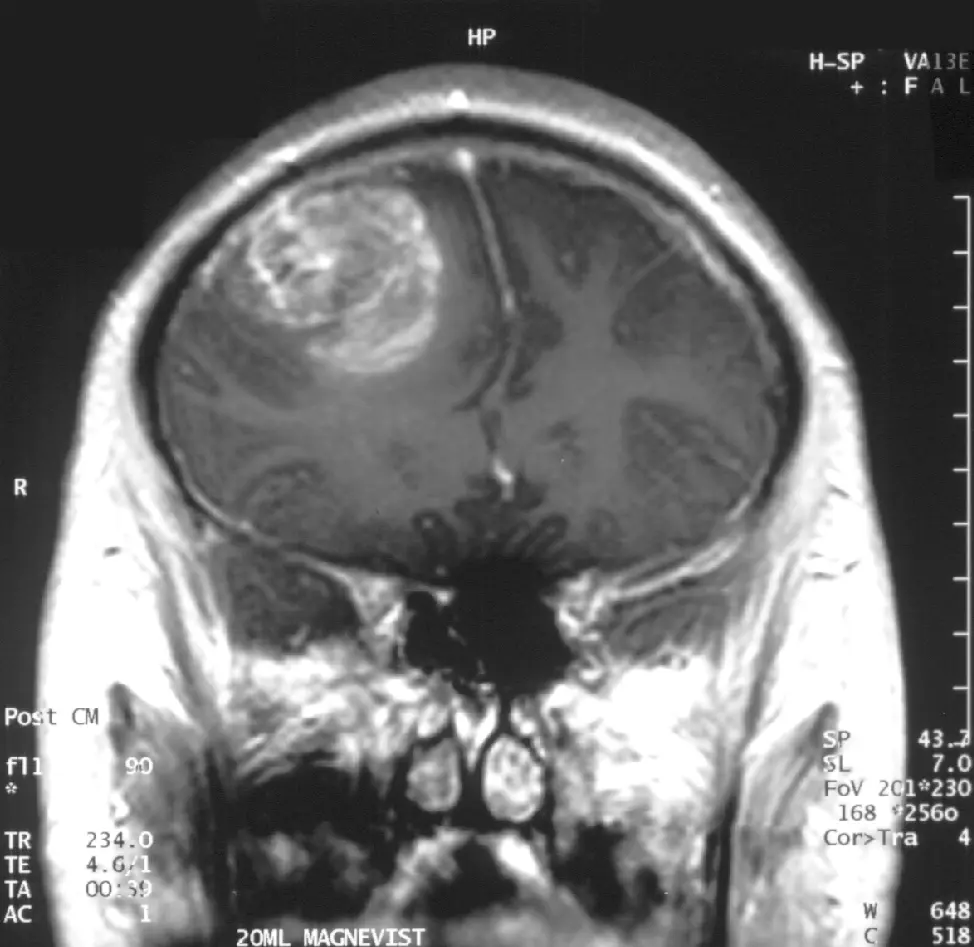
Not every MRI needs contrast. Whether your scan includes it is a decision your doctor and the radiologist make ahead of time, based on what they need to see, not something you choose from a menu when you arrive. Many exams, including most spine, joint, and first-time brain MRIs, are read perfectly well with no injection at all. Contrast gets added specifically when it will change what the images can show, not as a routine extra. Here's how that decision actually gets made, what the dye does, and what your options are if you can't have it.
What contrast actually does
MRI contrast (usually a gadolinium-based dye injected into a vein partway through the scan) works like a highlighter pen for the images. It doesn't change what's actually inside you, it just makes certain things, active inflammation, a tumor's blood supply, an infection, stand out more sharply against the surrounding tissue. Without it, two areas that look almost identical can be impossible to tell apart; with it, one lights up and the other doesn't.
It isn't radiation either. Gadolinium works by briefly changing how nearby water molecules respond to the scanner's magnet, a completely different mechanism from the radioactive tracers used in nuclear medicine, a distinction our guide to whether MRI uses radiation covers in more depth.
Which MRIs typically skip it, and which don't
Whether contrast is ordered depends far more on the question your doctor is trying to answer than on the body part alone.
- Usually no contrast: most spine and disc MRIs, most joint MRIs (knee, shoulder), a first brain MRI ordered for headaches, routine follow-up of something already known to be stable
- Usually with contrast: characterizing a mass or possible tumor, working up multiple sclerosis, monitoring a known cancer, evaluating infection, assessing a liver lesion, many post-surgical brain scans
Can the radiologist add contrast partway through?
Yes, sometimes. If something on the initial, non-contrast images is ambiguous, the radiologist supervising the exam can decide in real time that contrast would resolve the question, and you may be brought back into the scanner for an injection that wasn't originally scheduled. It isn't a sign that something is necessarily wrong; it just means the first set of images raised a question the dye can answer directly.
What if you can't have contrast
A small group of patients skip contrast even when it would normally be ordered: significant kidney disease, a prior allergic-type reaction to gadolinium, or pregnancy are the main reasons, and our guide to MRI contrast safety covers exactly who falls into that group and why. When that happens, your radiologist doesn't just skip the step, they read the non-contrast images knowing the limitation and factor it into what they can and can't confidently say, sometimes recommending a different follow-up test instead.
Whatever the scan shows, how carefully it's read matters just as much as whether contrast was used. If a report leaves you with more questions than answers, an independent second opinion, the kind of subspecialist read DocOrbit provides within a day or two, can look at the same images again without another scan or another injection.
Will I know in advance if my MRI includes contrast?
Usually, yes. The ordering physician typically specifies "with contrast," "without contrast," or "with and without contrast" on the referral, so you can ask the imaging center when you schedule if you're not sure which applies to you.
Does skipping contrast make the scan less accurate?
Not for exams that never needed it in the first place, contrast only adds value when it answers a specific question. If your radiologist recommended it and you couldn't have it, the report typically notes that limitation and may point toward a different follow-up test.
Can I refuse contrast if my doctor ordered it?
Yes, it's your decision. But declining a recommended contrast injection can leave a genuine question about the images unanswered, so it's worth talking it through with your doctor first so you understand exactly what would be missed.
Is the contrast injection painful?
Most people feel a brief pinch from the IV line and, as the contrast goes in, a few seconds of coolness or a faint metallic taste, nothing more. Serious reactions are uncommon.
Key takeaways
- Contrast isn't automatic, whether your MRI needs it depends on what your doctor is trying to see
- Many exams, including spine, joint, and initial brain scans, are read well without it
- Contrast highlights specific tissue like a highlighter, not a routine add-on
- It can occasionally be added mid-scan if the first images raise a question
- Kidney disease, prior reactions, and pregnancy are the main reasons to skip it
How do I have my MRI reviewed by another radiologist online?
Yes. Online radiology second opinions run entirely from home: you upload your images, with no CD to post and no second trip, and a subspecialist radiologist re-reads the study and writes a structured report you can give to your own doctor. DocOrbit returns that signed second read in 24 to 48 hours. You can then message the radiologist with questions about the MRI and about what the report actually means for you.
This article is for general information only and is not medical advice. Always discuss your imaging results and any next steps with a qualified physician.