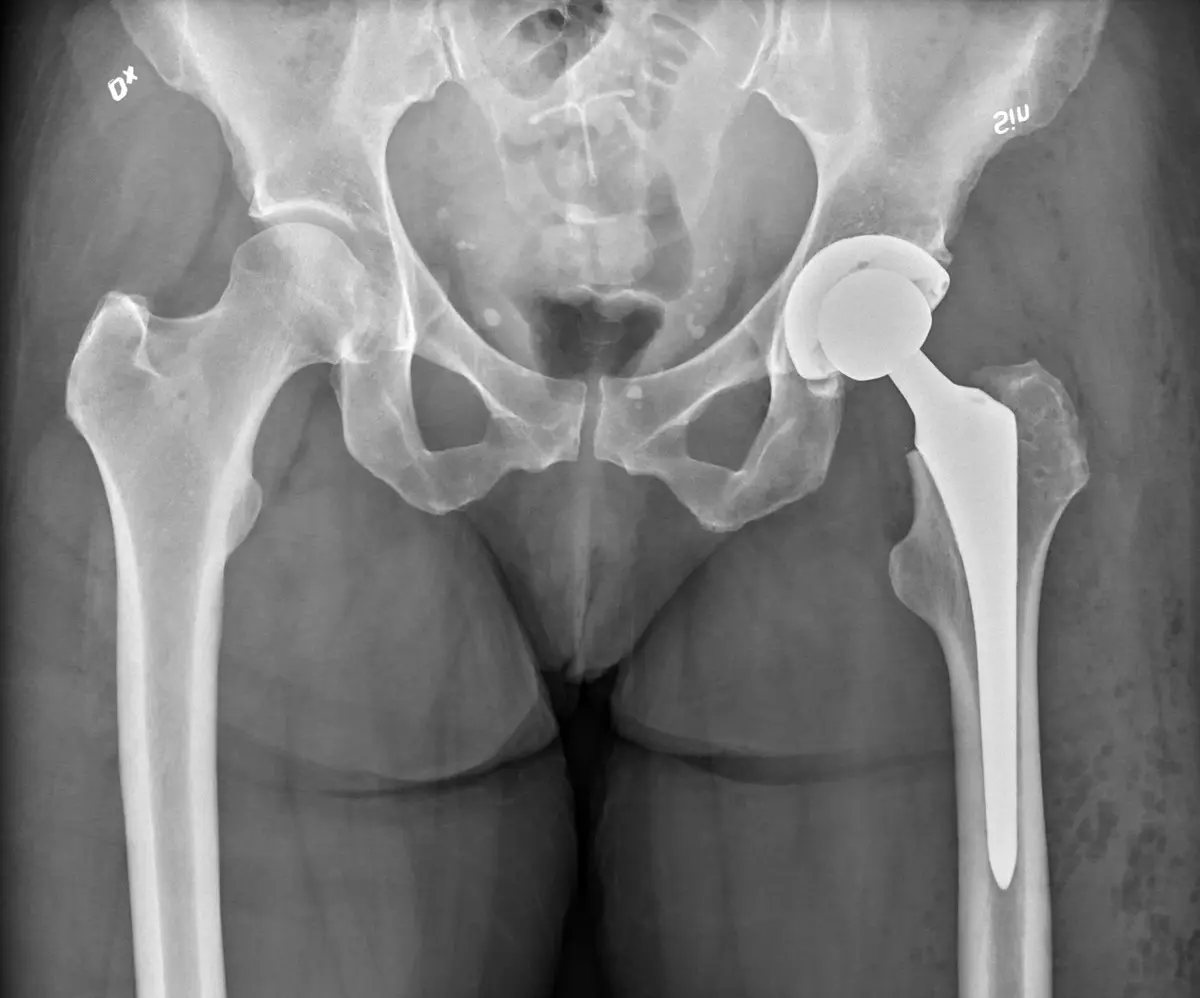
Yes, in the large majority of cases. Most joint replacements, surgical plates and screws, and dental work are perfectly safe inside an MRI scanner and don't need to be removed beforehand. What matters isn't whether you have metal, it's which metal, where it sits, and whether it's rated safe for the scanner you're entering, which is exactly what the pre-scan screening questionnaire sorts out.
Why metal is the real question, not radiation
An MRI doesn't use radiation, it builds images with a very strong magnet and radio waves instead. But that magnet is powerful and permanently on, strong enough to pull a steel wheelchair or an oxygen tank across the room hard enough to injure anyone in its path. That pull, not any effect on your health in general, is why metal gets asked about so carefully: a loose, strongly magnetic (attracted forcefully to a magnet, like iron or steel) object can become a projectile, and metal fixed inside your body can shift, warm slightly, or blur the images around it.
Most modern implant metals, titanium and MRI-rated stainless-steel or cobalt-chromium alloys, aren't strongly magnetic and simply sit still in the field. Strongly magnetic or not is the real distinction the questionnaire is probing for.
Metal that's almost always fine
Once an implant has healed into place and is labeled MRI-safe or MRI-conditional (cleared for scanning under specific settings), most of the metal patients worry about causes no problem at all.
- Hip, knee, and other joint replacements
- Surgical plates, screws, rods, and spinal hardware
- Most heart stents, once healed into the vessel wall after several weeks
- Dental fillings, crowns, and most permanent braces
- Hormonal IUDs and the surgical clips used in most abdominal or gynecologic surgery
These may leave a small dark smudge, called an artifact, in the images right around the metal, but the rest of the scan reads normally.
Metal that needs a closer look first
A shorter list of devices genuinely changes the plan, sometimes needing a monitored setting, sometimes a different test altogether.
- Pacemakers and defibrillators, especially older ones not labeled MRI-conditional
- Aneurysm clips placed before the mid-1990s or never confirmed as MRI-safe
- Cochlear implants
- Metal fragments or shrapnel, particularly near the eye
- Some older mechanical heart valves and neurostimulator leads
None of these make an MRI impossible outright; many patients with modern pacemakers are scanned routinely under a monitored protocol. The point is confirming the exact device, not guessing. When MRI genuinely isn't an option, your doctor typically substitutes CT or ultrasound, see our guide on how MRI and CT compare.
Before you're scanned
Every MRI starts with a screening questionnaire about implants, past surgeries, and any metal fragments from an accident or an occupation like welding. Bring your implant card if you have one; if not, your surgeon's office can usually look up the model in minutes. If there's real uncertainty about a fragment near the eye, the technologist may order a quick plain X-ray first, a five-minute precaution, not a sign anything is wrong.
Once you're cleared, how useful the scan turns out to be often comes down to who reads it. If a report mentions something you don't understand, an independent radiologist can review the same images and give you a second read for your own doctor, the kind of second radiological opinion DocOrbit provides within a day or two.
Can you have an MRI with a hip or knee replacement?
Yes, in nearly all cases. Modern joint replacements are made from titanium or other MRI-safe alloys that aren't strongly magnetic, so they don't move or heat meaningfully. They can cause a small artifact right around the implant, but the rest of the scan reads normally. Tell the technologist which joint was replaced and roughly when, since very old hardware occasionally needs a quick check first.
Can you have an MRI with a pacemaker or defibrillator?
Often yes, but it depends on the exact device. Most pacemakers and defibrillators implanted in the last decade or so are labeled MRI-conditional, meaning they can be scanned under a specific monitored protocol with settings adjusted before and after. Older, unlabeled devices are sometimes still scanned after a cardiology review, but that's decided case by case, never assumed.
Can you have an MRI with braces or metal dental fillings?
Yes. Braces, crowns, and fillings are fixed firmly in place and aren't strongly magnetic, so they don't move or heat during a scan. They can distort the images right around the mouth and jaw, which occasionally affects a brain or sinus MRI, but the technologist adjusts for this and rarely needs anything removed.
Does metal in your body heat up during an MRI?
Slightly, in some cases, but rarely enough to matter. The radio-wave pulses used to build the image can warm nearby metal a small amount, which is why MRI-conditional devices follow a protocol designed to keep that heating within a safe range. This matters more for long, wire-like devices than for solid implants, and it's also why some older tattoo ink, which can contain trace iron oxide, occasionally causes mild warmth at the tattoo site, not a reason to cancel a scan, just mention it beforehand.
Key takeaways
- Most implants, joint replacements, plates, screws, and most dental work, are MRI-safe once healed and don't need removal
- The magnet, not radiation, is the real safety concern with metal in an MRI
- Pacemakers, defibrillators, aneurysm clips, and cochlear implants need device-specific confirmation before scanning
- A suspected metal fragment near the eye is usually checked with a quick X-ray first
- The pre-scan screening questionnaire exists to catch all of this before you're near the magnet
This article is for general information only and is not medical advice. Always discuss your imaging results and any next steps with a qualified physician.