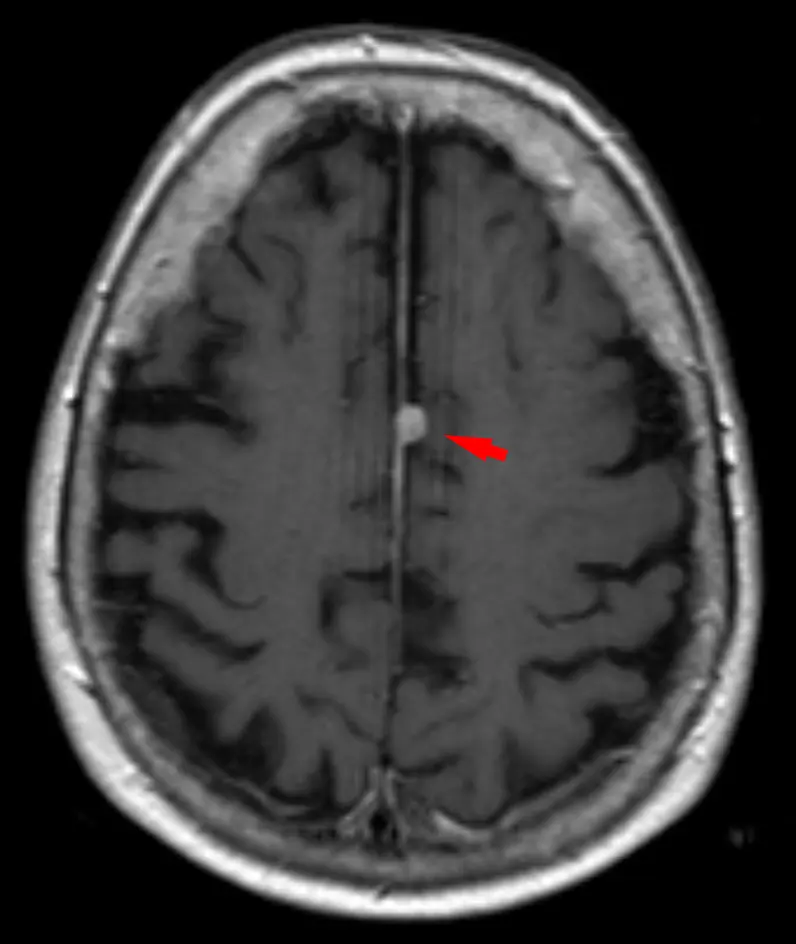
No. MRI (magnetic resonance imaging, a scan using a strong magnet and radio waves rather than X-rays) is one of the most sensitive tools in radiology, but it doesn't catch every tumor every time. A tumor can be too small to resolve, blend into nearly identical tissue, sit in an organ that moves during the scan, or need a contrast dye (gadolinium, injected into a vein to make tumors stand out) that wasn't given. None of this makes MRI unreliable, but "highly sensitive" isn't the same as "perfect." Here's what actually limits an MRI, and what to do if a normal scan still doesn't add up.
Why a tumor can slip past an MRI
A few things work against MRI, even in expert hands. Size is the most common: a tumor only a few millimeters across can sit below what a standard protocol resolves, especially without a high-resolution sequence built for that organ. Some tumors also carry almost the same water and fat content as the tissue around them, so they blend in rather than stand out. And movement, from the bowel, the heart, or ordinary breathing, can blur a scan enough to hide a small lesion, which is why abdominal and cardiac MRI use breath-holds and cardiac gating to fight it.
Think of MRI like a very good flashlight in a dark room. It lights up almost everything, but a small object nearly the same color as the wall, or one sitting right at the edge of the beam, can still go unnoticed even though the room is, technically, well lit.
Contrast, a protocol built for the organ in question, and a subspecialist radiologist who reads that organ often enough to catch a subtle pattern all close much of that gap; see our piece on whether an MRI can detect cancer for which organs MRI images best.
Where MRI is a weaker choice
MRI's strength is soft-tissue contrast, telling very similar tissues apart, which is why it excels in the brain, spine, breast, prostate, and liver. It's weaker for a few things. The lungs are mostly air and give almost no MRI signal, so CT finds small lung nodules far more reliably (see our guide on what to do after a lung nodule shows up on CT). Diffuse, infiltrating cancers that spread as a subtle thickening rather than a lump can look like ordinary, slightly firmer tissue, and small bowel polyps are still found better by endoscopy than by any scan. None of this is unique to MRI, every imaging tool has a body part and a tumor pattern it handles less well.
What to do if symptoms continue after a normal MRI
A normal MRI is reassuring, but not an absolute guarantee, especially if the symptom that prompted it hasn't gone away. Your doctor may repeat the scan with a different protocol, add contrast if none was used, order a different type of scan, or look at the existing images again. An online radiology second opinion is worth considering too: a subspecialist re-reads the actual images rather than the typed report, often exactly where a small or unusual finding gets caught the second time. Our piece on how second opinions improve cancer outcomes looks at this in more depth.
Can a tumor be missed on an MRI?
Yes, though it's uncommon for large or classic-looking tumors. Small size, low contrast against nearby tissue, motion, and a protocol built for a different question are the usual reasons, and a busy reading list under time pressure adds a human factor on top.
Does a normal MRI rule out cancer completely?
No test does, MRI included. A normal result means no suspicious finding was seen with that scan and protocol; it doesn't rule out something very small or better seen with a different type of imaging. Persisting or worsening symptoms are still worth mentioning to your doctor.
Why would a radiologist miss a tumor on an MRI?
Usually a mix of factors rather than one mistake: a subtle or atypical appearance, an organ that moved during the scan, a protocol built for a different question, or the sheer number of images in one study. It's why a second radiologist, reading with fresh eyes, sometimes spots what the first read did not.
Can I ask a radiologist about my MRI report online?
Yes. You upload your images from home, with no CD to post and no extra trip, and a subspecialist radiologist re-reads the scan and writes a structured report you can share with your own doctor within 24 to 48 hours. You can message the radiologist with questions afterward. Orbius, DocOrbit's AI radiology agent, can also give you a structured first read in minutes.
Key takeaways
- MRI is highly sensitive but not perfect: small, subtle, or oddly located tumors can still be missed
- Contrast, the right protocol, and a subspecialist reader improve the odds of catching a tumor
- Lungs, diffuse infiltrating cancers, and small bowel polyps are examples where MRI isn't the best first choice
- A normal MRI is reassuring but not an absolute guarantee, especially if symptoms persist
- A second, subspecialist read can catch what a first pass missed
This article is for general information only and is not medical advice. Always discuss your imaging results and any next steps with a qualified physician.