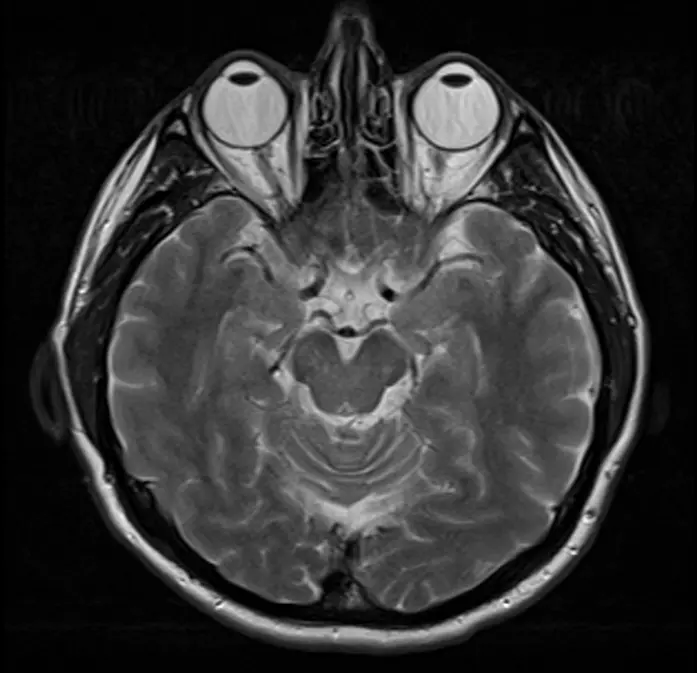
Usually not, and that's a good sign. In the large majority of people who get a brain MRI for headaches, the scan comes back completely normal, because most headaches, including migraine and tension-type headache, don't come from anything a picture can show. A brain MRI is genuinely good at finding the smaller group of headaches that do have a visible cause: a tumor, a bleed, a blocked or ballooned blood vessel, pressure from spinal fluid. Here's what the scan actually looks for, and when a doctor is likely to order one.
Why most headaches don't show up on a scan
Migraine and tension-type headache make up the vast majority of headaches, and doctors call them primary headache disorders for a reason: nothing is structurally wrong with the brain. The pain comes from how the nerves and blood vessels are firing, not from a lesion sitting somewhere a camera could catch it.
Think of it like a car's check-engine light. An MRI is very good at finding a broken part, a tumor pressing on tissue, a torn vessel, a blocked drain of spinal fluid. It isn't built to find a wiring problem, and migraine behaves like one. That's why a completely normal MRI and a genuinely severe headache disorder turn up in the same person all the time.
What a brain MRI actually catches
The minority of headaches that do have a visible cause is the reason doctors order the scan at all. On a standard brain MRI, a radiologist is checking for:
- A brain tumor or mass, benign or malignant, including the most common primary type, meningioma
- Bleeding in or around the brain, from a fall, a burst vessel, or a bleeding disorder
- Hydrocephalus, a buildup of spinal fluid that raises pressure inside the skull
- An abscess or infection, when headache comes with fever or a recent sinus or ear infection
- Demyelinating lesions, the kind seen in multiple sclerosis
A standard MRI isn't an angiogram: vessels show up as dark flow voids rather than a detailed map, so a suspected brain aneurysm or a narrowed vessel usually needs an added sequence, MRA or MRV, ordered specifically for that concern.
When doctors actually order one
Most people with a typical migraine or tension headache and a normal neurological exam don't need imaging at all, which is the guidance in the American College of Radiology's own appropriateness criteria for headache. A scan gets ordered when something about the headache itself raises a flag:
- A sudden, "worst headache of my life" onset, what doctors call a thunderclap headache
- A new headache pattern starting after age 50
- Headache paired with a new neurological symptom, weakness, numbness, vision change, or confusion
- A headache that keeps getting worse over days or weeks, or wakes someone from sleep
- A history of cancer, a weakened immune system, or a recent head injury
None of these mean something serious is present. They mean it's worth a scan to rule it out.
If the scan already came back normal
A normal brain MRI doesn't mean the headaches aren't real. It means the dangerous causes have been ruled out, and the next step is treating the headache disorder itself with a doctor who specializes in it. If you're unsure how to read the report, or want another set of eyes on the images, an online radiology second opinion from a subspecialist is one option. It won't change what was ruled out, but it can confirm nothing was missed and put the report into plain language.
Can a CT scan find the cause of headaches instead of an MRI?
For some situations, yes, and faster. A CT is usually the first scan in an emergency room because it's quick and very good at showing fresh bleeding. An MRI takes longer but shows soft-tissue detail a CT can't, which is why it's preferred for a fuller look once the most urgent causes are ruled out.
What does a normal brain MRI mean if the headaches keep happening?
It means the structural causes doctors were checking for, a tumor, bleeding, a blocked fluid pathway, aren't present. It doesn't mean the pain isn't real. Migraine and tension-type headache are diagnosed from symptoms and history, not from anything visible on a scan, and treatment goes ahead on that basis.
Can I ask a radiologist about my brain MRI report online?
Yes. You upload your images from home, with no CD to send and no extra trip, and a subspecialist radiologist reviews the scan and writes a structured report you can share with your own doctor within 24 to 48 hours. You can message the radiologist with questions afterward, and Orbius, DocOrbit's AI radiology tool, can give a faster, lower-cost first read in minutes if you want an answer sooner.
Key takeaways
- Most headaches, including migraine and tension-type headache, don't have a visible cause on a brain MRI, and that's a normal, expected result
- A brain MRI is best at finding structural causes: tumors, bleeding, hydrocephalus, MS lesions, not the "wiring" behind migraine
- Red flags like a sudden severe onset, a new pattern after 50, or a new neurological symptom are what actually prompt a scan
- A normal MRI doesn't mean the pain isn't real
This article is for general information only and is not medical advice. Always discuss your imaging results and any next steps with a qualified physician.