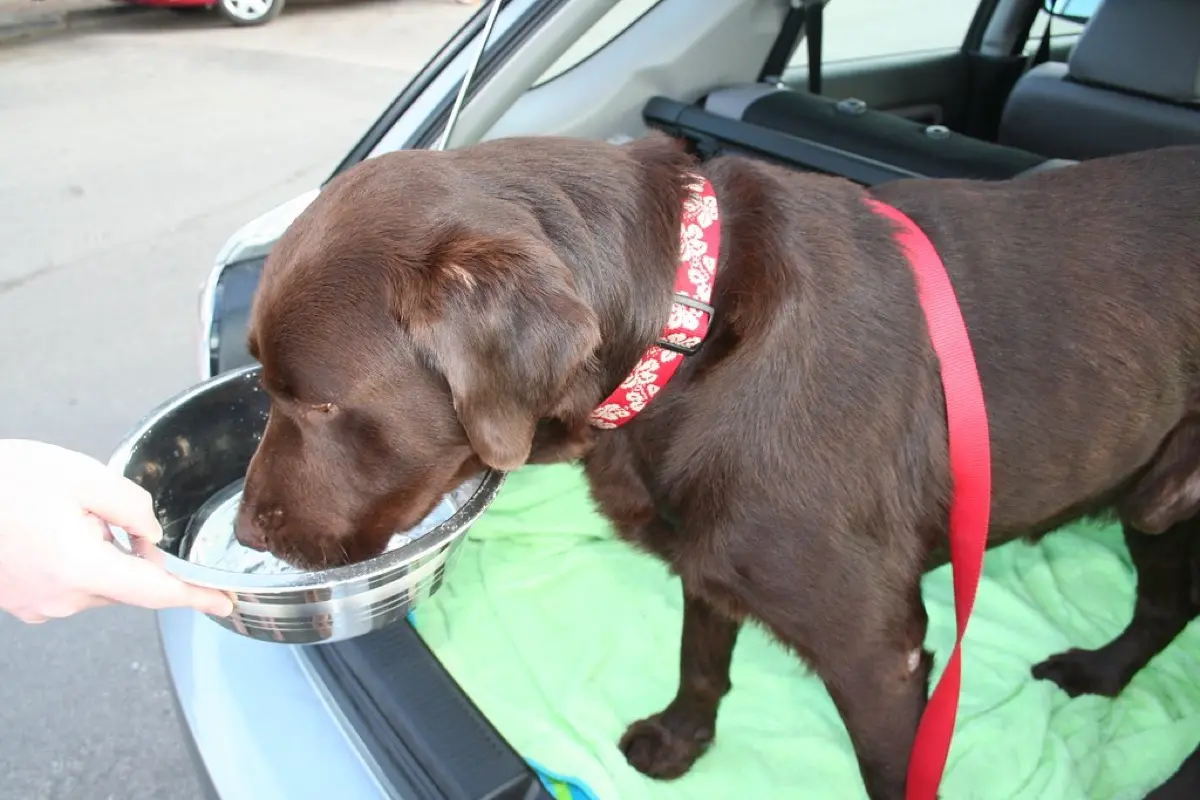
Your dog empties the water bowl twice a day, asks to go out at three in the morning, has developed a rounded belly, and the coat is thinning along the flanks. For a long time it just looks like getting old, which is exactly why Cushing's disease is so often diagnosed late. The reassuring part: this is a slow, manageable hormonal condition rather than a fast-moving one, most affected dogs have the treatable form, and many live comfortably for years once the right diagnosis is in place.
What Cushing's disease actually is
Cushing's disease, properly called hyperadrenocorticism, means the body is producing too much cortisol. Cortisol is a normal and necessary hormone, involved in stress response, blood sugar, and inflammation. In excess and over months, it starts remodelling the body: it thins the skin, wastes muscle, redistributes fat to the abdomen, and drives thirst.
There are three routes to the same result, and telling them apart matters more than the label itself.
- Pituitary-dependent (roughly 80 to 85 percent of cases) — a small, usually benign tumour in the pituitary gland at the base of the brain over-signals both adrenal glands. This is the common form and the one most amenable to lifelong medication
- Adrenal-dependent — a tumour on one adrenal gland itself producing cortisol. Roughly half of these are benign, and surgery can be curative in the right candidate
- Iatrogenic — caused by long-term steroid medication given for something else, such as allergies or immune disease. It resolves as the steroid is carefully tapered, which must never be done abruptly
The signs owners actually notice
Almost nobody brings a dog in saying they suspect a hormone problem. They come in because of the water bowl, or the accidents, or a coat that stopped growing back.
- Drinking far more than usual, and urinating more, sometimes with new indoor accidents at night
- A ravenous appetite, including stealing food from a dog that never used to
- A pot-bellied or sagging abdomen, often with loss of muscle over the back and hind legs
- Symmetrical hair loss along the flanks and trunk, usually without itching
- Thin skin that bruises easily, wounds that heal slowly, recurrent skin or urinary infections
- Panting at rest and reduced stamina
- Occasionally calcium deposits in the skin, firm chalky plaques known as calcinosis cutis
Middle-aged and older dogs are the typical patients, and poodles, dachshunds, beagles, terriers, and boxers appear more often than average. The absence of itching alongside the hair loss is a useful clue, because it separates this pattern from most allergic skin disease.
Why the diagnosis is genuinely tricky
This is the part worth understanding before you are asked to consent to a second or third round of testing.
Cortisol goes up with ordinary stress. A nervous dog at the clinic, a dog with a urinary infection, or a dog with untreated diabetes can all produce results that look suspicious. There is no single test that settles the question, which is why veterinary endocrinologists insist on starting from the clinical picture and testing only dogs that actually look the part.
Typical steps look like this:
- Routine bloodwork and urine — often shows a raised alkaline phosphatase, dilute urine, and sometimes raised cholesterol. Suggestive, never diagnostic
- Urine cortisol-to-creatinine ratio — best used to rule the disease out. A normal result at home largely excludes it; an abnormal one proves little
- Low-dose dexamethasone suppression test — a several-hour test that is the usual screening choice, and can sometimes also indicate which form is present
- ACTH stimulation test — shorter, and the test of choice when steroid-induced Cushing's is suspected or for monitoring treatment
- Abdominal ultrasound — distinguishes two evenly enlarged adrenal glands from a one-sided mass, which is the distinction that changes the treatment plan
Ultrasound is doing real work here, not just confirming. It also surveys the liver and gallbladder, and Cushing's is one of the recognised associations with a gallbladder mucocele, so the two are often looked for together.
How it is treated
Trilostane is the mainstay for the pituitary-dependent form. It reduces cortisol production and is given daily and lifelong, with recheck tests at set intervals and after any dose change. Most dogs tolerate it well, and thirst and appetite usually settle first, within weeks, while the coat can take several months to recover.
The important safety point is that the goal is control, not elimination. Pushing cortisol too low causes its own problem, hypoadrenocorticism, which shows as lethargy, vomiting, diarrhoea, or collapse. If your dog becomes unwell on treatment, the medication should be stopped and your vet contacted rather than the next dose given.
Surgery is the definitive answer for a one-sided adrenal tumour in a dog fit enough for the procedure, and can be curative when the tumour is benign and has not invaded nearby vessels.
Radiation is occasionally used for large pituitary tumours causing neurological signs, which is uncommon.
Iatrogenic cases need a slow, supervised steroid taper. Stopping abruptly can trigger a dangerous adrenal crisis.
Living with it day to day
Keep water freely available at all times. Restricting water in a dog with Cushing's is genuinely dangerous, because the drinking is compensating for urine the body cannot concentrate. Expect more night-time outings until treatment takes effect, and plan for them rather than fighting them.
Beyond that, keep your dog lean, expect a longer recovery from any wound or infection, mention every new medication to your vet since steroids in ear or eye drops still count, and keep to the recheck schedule even when your dog seems fine. The monitoring tests exist to catch overtreatment before it becomes an emergency.
Why a second read can help
Cushing's sits at the intersection of subtle bloodwork and subtle imaging. Adrenal glands are small structures, the difference between mild symmetrical enlargement and a genuine one-sided mass is measured in millimetres, and getting that call wrong sends a dog toward the wrong treatment entirely. Because the alternative paths are lifelong medication versus abdominal surgery, this is a diagnosis where confidence is worth paying for. DocOrbit can arrange an independent specialist review of your dog's ultrasound images and test results and return a written report you can take to your own vet, which is often useful when the results are borderline or when the picture does not match how your dog seems. The same reasoning applies to any slow-onset condition in an older animal, as we discuss in our piece on chronic kidney disease in cats.
How long can a dog live with Cushing's disease?
Many dogs live comfortably for years with treated pituitary-dependent Cushing's, and a good number die eventually of something unrelated. Because it is typically diagnosed in older dogs, the disease often becomes one of several conditions being managed rather than the one that decides the outcome. Adrenal tumours have a wider range of outcomes depending on whether the tumour is benign, malignant, and whether it can be removed.
Does Cushing's disease in dogs always need treatment?
No, and this surprises many owners. Treatment is aimed at the clinical signs, not at the test numbers, so a dog with mild changes and a good quality of life is sometimes monitored rather than medicated. Treatment is usually started when the drinking, urinating, panting, skin problems, or muscle loss are genuinely affecting the dog or the household. Your vet weighs the benefit against the medication's own risks.
Why is Cushing's disease so hard to diagnose in dogs?
Because no single test is definitive. Cortisol rises with ordinary stress, so a dog that is simply anxious at the clinic can produce a suspicious result, and other illnesses such as diabetes or kidney disease can push the same tests in the same direction. This is why diagnosis rests on the combination of clinical signs, screening tests, and imaging rather than on one number, and why testing a dog with no symptoms is discouraged.
What does an ultrasound show in a dog with Cushing's?
Ultrasound is mainly used to tell the two forms apart. Two symmetrically enlarged adrenal glands point toward the pituitary-dependent form, which is the far more common one. A mass on one gland with the other shrunken points toward an adrenal tumour, which changes the treatment plan completely. It also lets your vet check the liver, look for gallbladder changes, and rule out other causes of the same signs.
Is Cushing's disease in dogs painful?
The disease itself is not painful in the way an injury is, and dogs with it usually do not act sore. What it does is make them uncomfortable in other ways: constant thirst, needing to urinate through the night, panting, thin skin that bruises and heals slowly, and muscle weakness that makes stairs harder. Treatment aims at exactly these quality-of-life problems.
Key takeaways
- Cushing's is chronic cortisol excess, and its signs are easy to mistake for normal ageing
- Around four in five cases come from a small benign pituitary tumour and are managed with daily medication
- No single test diagnoses it; the picture comes from signs, screening tests, and ultrasound together
- Ultrasound mainly answers one crucial question: two enlarged glands, or a mass on one
- Never restrict water, and contact your vet rather than continuing medication if your dog becomes unwell on treatment
This article is for general information only and is not veterinary advice. Always discuss your animal's imaging results and next steps with a qualified veterinarian.