If your dog suddenly started limping on a back leg and the report or your vet mentioned a cranial cruciate ligament rupture, you have run into the most common orthopedic knee injury in dogs, often called the canine version of a human ACL tear. The reassuring truth is that this is a very well understood problem with several effective treatments, and most dogs return to comfortable, active lives. Here is what the finding means, why it usually happens, how it is diagnosed, and how owners and vets decide between surgery and conservative care.
What is the cranial cruciate ligament?
The cranial cruciate ligament, or CCL, is a band of tissue inside the knee, which vets call the stifle. It runs across the joint and stops the shin bone from sliding forward under the thigh bone and from twisting too far, doing the same job as the anterior cruciate ligament, the ACL, in a human knee. When it tears, the joint becomes unstable, which is why a dog with a cruciate injury often holds the leg up or limps after rest.
An important point surprises many owners: in dogs this is usually not a single dramatic accident. Most cruciate ruptures are the end result of a slow degenerative weakening of the ligament that has developed over months. The ligament frays and stretches until a normal jump or turn finally finishes it off. That is why a partial tear, with lameness that comes and goes, is such a common early picture, and why the opposite knee is so often affected too.
Why does it happen?
Because the process is largely degenerative, several factors stack the odds rather than a single injury.
- Breed and body type, with certain larger breeds carrying a higher tendency
- Being overweight, which loads the knee with every step
- The natural conformation of the knee in some dogs, which places more strain on the ligament
- Age-related weakening of the ligament tissue itself
- Being spayed or neutered, which studies link to a modestly higher rate in some breeds
- A sudden twist or jump that ruptures an already weakened ligament
None of these guarantee a tear, but together they explain why cruciate disease is common, why it often affects both knees, and why keeping a dog lean matters so much.
How is it diagnosed?
Diagnosis starts with a hands-on orthopedic exam, which is often the most telling part. Your vet feels for instability in the joint using two classic tests: the cranial drawer sign, where the shin bone can be gently drawn forward relative to the thigh, and the tibial thrust test, which reproduces the same forward slide by flexing the ankle. A positive test strongly suggests a cruciate problem. Because these movements can be uncomfortable, some dogs need sedation for a reliable result.
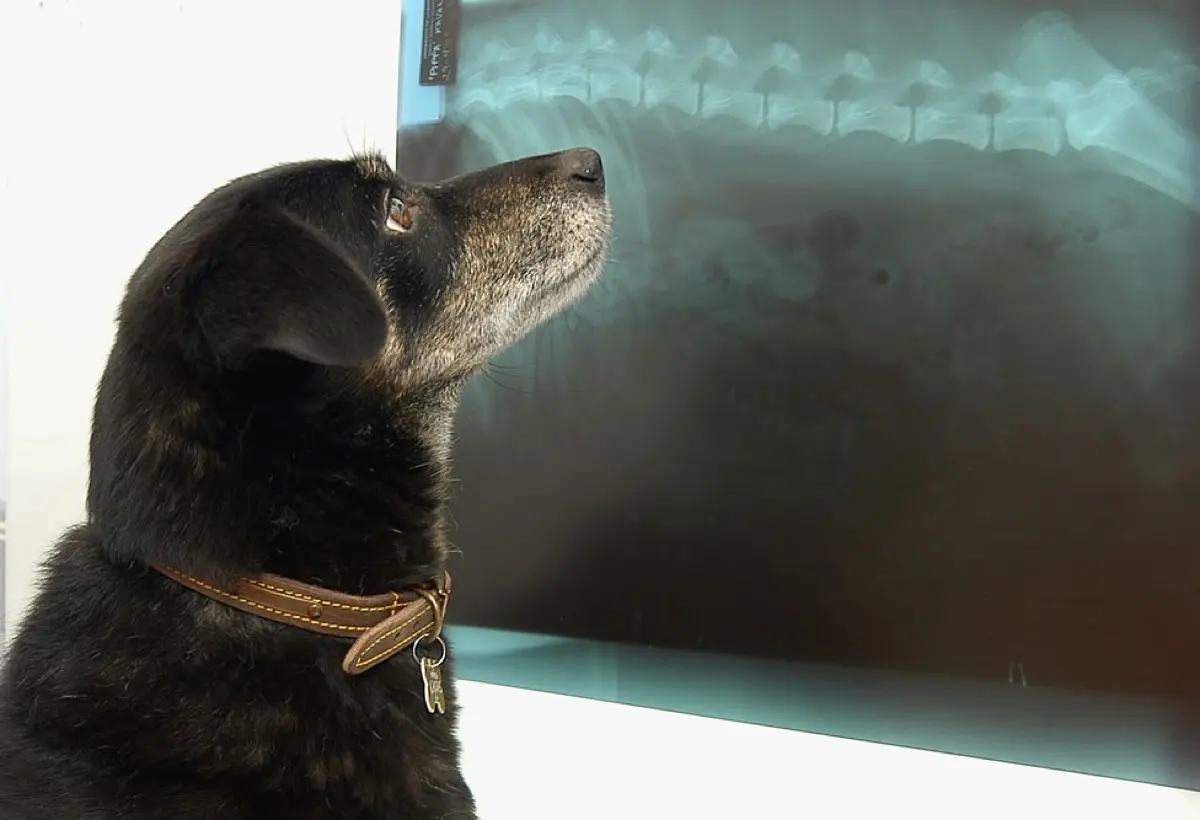
Radiographs, the everyday X-rays, are the next step, but here is a detail worth understanding: an X-ray does not actually show the ligament itself. Instead, the radiologist looks for the indirect signs of the injury, chiefly swelling and extra fluid within the joint, known as joint effusion, and any early arthritis, or osteoarthritis, around the knee. They also help rule out other causes of a limp and plan surgery. Advanced imaging such as MRI, or looking inside the joint with a tiny camera during arthroscopy, is occasionally used in tricky cases, but most cruciate tears are diagnosed on exam and radiographs. If your dog has more than one sore joint, your vet may also be weighing conditions like canine hip dysplasia, which can look similar from the outside.
What about the meniscus?
The meniscus is a pair of cartilage cushions that sit inside the knee and absorb load. When the cruciate ligament fails and the joint becomes unstable, the meniscus can get pinched and torn, which happens alongside a cruciate rupture in a meaningful share of dogs. A torn meniscus is a common reason a dog stays painful and sometimes produces an audible click as the dog walks. Surgeons usually inspect the meniscus during cruciate surgery and trim any damaged portion, because leaving a torn meniscus behind is a frequent cause of ongoing discomfort.
Is it serious, and what about the other knee?
A cruciate tear is not an emergency in the way a sudden collapse is. It is, however, a genuine problem that tends not to fully resolve on its own, because the knee stays mechanically unstable and arthritis gradually sets in. The most important thing for owners to know is about the opposite leg: since the underlying cause is usually a degenerative weakening rather than bad luck, a large share of dogs rupture the cruciate ligament in the other knee within a year or two. That is not inevitable, but it is worth planning for and is a strong argument for keeping your dog at a healthy weight.
How is it treated?
There are two broad paths, surgical and conservative, and the right one depends on your dog's size, age, activity level, other health issues, and your circumstances.
Surgery is the most common recommendation for medium and large active dogs, and the main options fall into two families. The first reshapes the top of the shin bone so the knee is stable during movement without needing the ligament at all; the two best-known versions are the TPLO (tibial plateau leveling osteotomy) and the TTA (tibial tuberosity advancement). The second family, the lateral suture or extracapsular repair, places a strong band outside the joint to take over the ligament's job while scar tissue builds, and is often chosen for smaller dogs. Each has a solid track record, and no single one is best for every dog.
Conservative management, without surgery, is a reasonable choice for small dogs, less active dogs, dogs with anesthetic risks, or when surgery is not an option. It relies on strict activity restriction, weight loss, anti-inflammatory pain relief, and structured physiotherapy over weeks to months, aiming to build supportive scar tissue and muscle. It asks a lot of the owner in discipline and tends to work better in lighter dogs than in large athletic ones.
Recovery and rehabilitation
Whichever path you take, recovery is a marathon rather than a sprint, and how carefully the early weeks are managed has a big effect on the result. After surgery, most dogs go through roughly eight to twelve weeks of controlled recovery: strict rest at first, then short leash walks, then a gradual return to normal activity as the surgeon allows. Rehabilitation such as guided exercises and sometimes underwater treadmill work can noticeably improve how well and how quickly the leg comes back, and keeping your dog slim throughout takes load off both the healing knee and the other one. If your dog also has back or spinal signs, remember that hind-leg weakness can come from other places too, including conditions like intervertebral disc disease, which your vet will tease apart.
Why a second read can help
Cruciate disease is common, but the decisions around it are not always simple: whether a tear is partial or complete, whether the meniscus is involved, how much arthritis is present, and which surgery suits your particular dog. These judgments rest heavily on the exam and on how the radiographs are interpreted. If you would value another expert eye on the images before committing to a plan, DocOrbit offers a veterinary second opinion on your pet's scan that you can share with your vet. It is a calm way to compare surgical options before major orthopedic surgery.
Can a dog recover from a cruciate ligament tear without surgery?
Some dogs do well with conservative management, especially smaller dogs, less active dogs, and those who are not good surgical candidates. It relies on strict activity restriction, weight control, pain relief, and physiotherapy over many weeks, and it aims to build scar tissue and muscle support rather than to truly heal the ligament. For most medium and large active dogs, surgery tends to give more reliable use of the leg, but the best choice depends on your dog and is worth discussing openly with your vet.
Is TPLO surgery better than a lateral suture for a dog cruciate tear?
There is no single best operation for every dog. TPLO and TTA change the mechanics of the knee so the joint is stable during movement and are often favored for larger and more active dogs. The lateral suture or extracapsular repair places a strong band outside the joint to mimic the ligament and is frequently used in smaller dogs. Good outcomes are reported with each, so the right choice depends on your dog's size, activity, the surgeon's experience, and cost.
How long does it take a dog to recover after cruciate ligament surgery?
Most dogs need about eight to twelve weeks of carefully controlled recovery, starting with strict rest and short leash walks and slowly building activity as healing allows. Many are using the leg comfortably within a few months, though full return to athletic activity can take longer. Structured physiotherapy and keeping your dog lean both help, and your surgeon will set the pace based on how the knee is healing.
Will my dog tear the cruciate ligament in the other knee too?
It is common. Because most canine cruciate disease is a slow degenerative process rather than a one-off accident, the same weakening often affects the opposite knee. A large share of dogs go on to rupture the other cruciate ligament within a year or two. Keeping your dog at a healthy weight and staying alert for new hind-leg lameness helps you catch it early.
What happens if a torn cruciate ligament in a dog is left untreated?
An unstable knee tends to stay painful and develops arthritis over time, and the ongoing instability can lead to a meniscal tear that causes further discomfort. Some small or inactive dogs settle reasonably well with conservative care, but many dogs continue to limp and lose muscle in the leg. Because outcomes vary, it is worth having the knee assessed rather than assuming it will simply heal on its own.
Key takeaways
- A cranial cruciate ligament rupture is the canine equivalent of an ACL tear and the most common knee injury in dogs
- It is usually a slow degenerative process, not just a single accident, so the other knee often tears later too
- Diagnosis rests on the orthopedic exam plus X-rays that show joint effusion and arthritis rather than the ligament itself
- Surgery (TPLO, TTA, or lateral suture) and conservative care are both valid; the best choice depends on your dog
- A torn meniscus often accompanies the injury, and careful, patient rehabilitation strongly influences the outcome
Can I get a second opinion on my pet's X-ray online?
Yes. Online veterinary radiology second opinions run entirely from home: you upload your images, with no CD to post and no second trip, and a subspecialist veterinary radiologist re-reads the study and writes a structured report you can give to your own vet. DocOrbit returns that signed second read in 24 to 48 hours. You can then message the veterinary radiologist with questions about the X-ray and about what the report actually means for your pet.
This article is for general information only and is not veterinary advice. Always discuss your animal's imaging results and next steps with a qualified veterinarian.