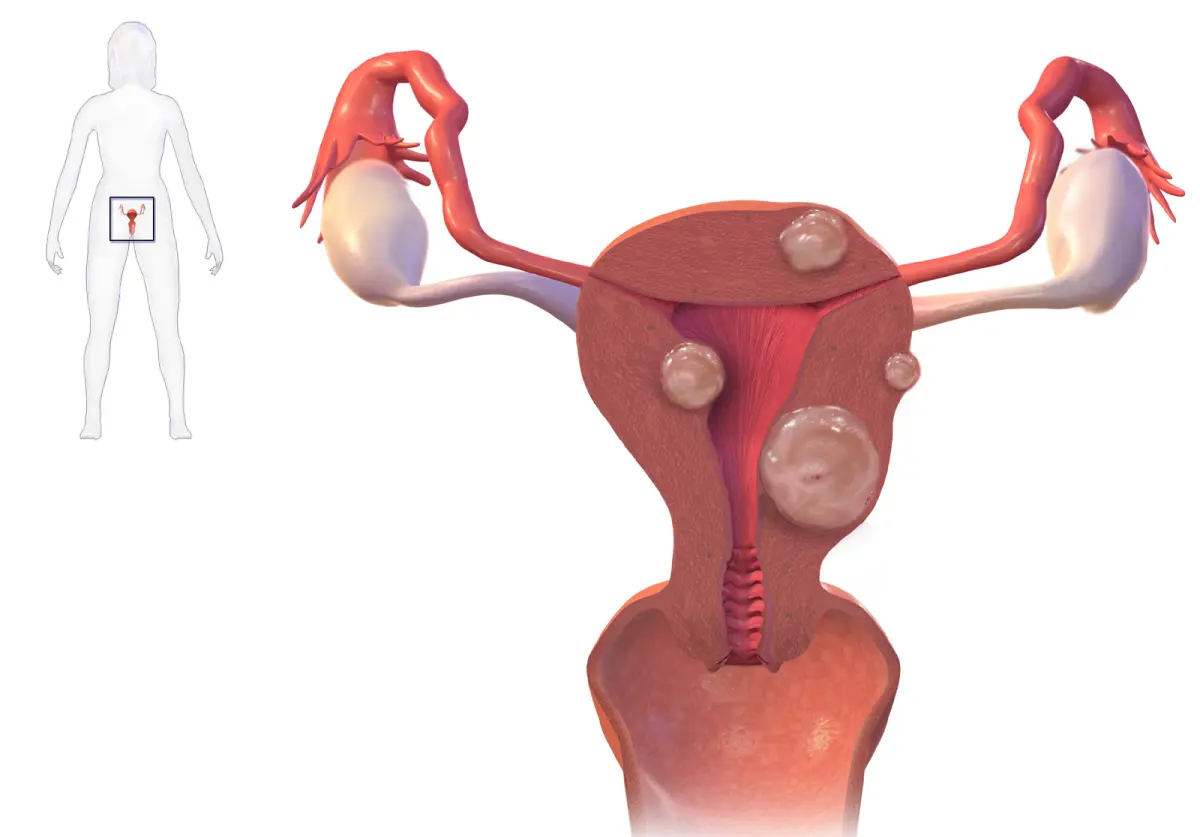
Seeing "uterine fibroid" or "leiomyoma" on an ultrasound or MRI report can be unsettling, especially if you have never heard the word before. The reassuring truth: fibroids are one of the most common findings in women of reproductive age, they are almost always non-cancerous, and a great many of them never cause a single symptom. Here is what a fibroid actually is, why it shows up, when it matters, and what your options are if it does.
What is a uterine fibroid?
A uterine fibroid is a benign growth made of the smooth muscle and fibrous tissue that form the wall of the uterus. Doctors also call them leiomyomas or myomas, different words for the same thing. They range from tiny seeds a few millimeters across to large masses that can distort the shape of the uterus, and it is common to have more than one at the same time.
Fibroids are usually described by where they sit in the uterine wall, because location matters more than size for symptoms:
- Intramural, within the muscular wall itself, the most common type.
- Subserosal, bulging outward from the outer surface, sometimes on a stalk.
- Submucosal, pushing into the inner cavity where a pregnancy would grow; these are the most likely to cause heavy bleeding or fertility problems even when small.
On ultrasound a fibroid usually looks like a well-defined, rounded area that is slightly different in texture from the surrounding muscle. MRI is used when doctors need a precise map of how many there are and exactly where they sit, for example when planning a procedure.
What causes fibroids?
The exact cause is not fully understood, but fibroids clearly respond to the hormones estrogen and progesterone. That is why they tend to appear during the reproductive years, can grow during pregnancy, and often shrink after menopause. Several factors make them more likely:
- Age, they become more common through the 30s and 40s.
- Family history, having a mother or sister with fibroids raises the odds.
- Ethnicity, they are more common, tend to appear earlier, and can be larger in Black women.
- Other factors linked in studies include earlier first period, obesity, and diet, though none of these is a guaranteed cause.
Is a uterine fibroid serious?
For most people, the answer is no. Fibroids are benign, and the majority are discovered incidentally on a scan done for another reason. The concern is almost never cancer, a cancerous uterine muscle tumor (leiomyosarcoma) is rare and is treated as a separate diagnosis. What makes a fibroid "matter" is whether it causes symptoms.
Features that lead doctors to look more closely include a mass that grows rapidly, one that appears or enlarges after menopause, or an appearance on imaging that does not fit a typical fibroid. These situations are uncommon, but they are the reason a report may recommend follow-up imaging or a specialist visit rather than simple reassurance. If you would like a clearer read on how urgent a finding is, it can help to get a second radiological opinion before making decisions.
What symptoms can fibroids cause?
Many fibroids are completely silent. When they do cause trouble, the most common symptoms are:
- Heavy or prolonged menstrual bleeding, sometimes with clots.
- Pelvic pressure or a feeling of fullness.
- Frequent urination or difficulty emptying the bladder, when a fibroid presses on it.
- Lower back or pelvic ache.
- Pain during intercourse.
- In some cases, difficulty conceiving or complications in pregnancy.
Heavy bleeding is the symptom that most often brings people in, and over time it can lead to iron-deficiency anemia, which is worth treating in its own right.
How are fibroids diagnosed and followed up?
The first-line test is a pelvic ultrasound, often done both across the abdomen and internally for a closer view. If more detail is needed, MRI gives the most complete picture. A special ultrasound with fluid placed in the uterine cavity (saline sonohysterography) can show submucosal fibroids that affect the cavity.
Follow-up depends entirely on the situation. A small, symptom-free fibroid usually needs no active treatment, watchful waiting is standard, with a repeat scan only if symptoms change. As with an ovarian cyst found on ultrasound, the finding on its own is often less important than what your body is telling you and what your doctor sees in the full clinical picture.
Treatment options
There is a wide menu of treatments, and the best one depends on your symptoms, age, plans for pregnancy, and how much the fibroid is affecting your life. Broadly they fall into three groups:
- Watch and wait, the default for fibroids that are not causing problems.
- Medication, hormonal treatments and other medicines can control heavy bleeding and, in some cases, temporarily shrink fibroids. These manage symptoms rather than remove the fibroid.
- Procedures, options range from uterine artery embolization (cutting off a fibroid's blood supply) to myomectomy (surgically removing the fibroid while keeping the uterus) and, when appropriate, hysterectomy. Newer focused-ultrasound techniques exist too.
If preserving fertility is important, that shapes the choice considerably, which is why these conversations belong with a gynecologist who knows your history.
Lifestyle and self-care
No lifestyle change is proven to make fibroids disappear, but a few things help you feel better and stay healthy while they are monitored: maintaining a healthy weight, staying physically active, and treating any anemia from heavy periods with the iron your doctor recommends. Tracking your cycle and symptoms also gives your doctor useful information at follow-up.
Why a second read can help
Fibroids sit at the crossroads of imaging and gynecology, and the wording of a radiology report, number, size, location, and any "atypical" note, shapes the decisions that follow. An expert second read can confirm that a finding is a straightforward fibroid, clarify where it sits, and translate the report into plain language you can act on. DocOrbit offers exactly that: a clear, independent second opinion on your scan that you can download and share with your own gynecologist, so you walk into your appointment already understanding what the report says.
Are uterine fibroids cancerous?
The overwhelming majority of uterine fibroids are benign and never turn into cancer. A cancerous tumor of the uterine muscle, called a leiomyosarcoma, is very rare and is considered a separate condition rather than a fibroid that turned bad. Doctors pay closer attention when a mass grows quickly, appears after menopause, or looks unusual on imaging, but for a typical fibroid the risk is very low.
Do uterine fibroids always need to be removed?
No. Many fibroids are found by chance and cause no symptoms, so the usual plan is simply to watch them. Treatment is generally considered only when a fibroid causes heavy bleeding, pain, pressure symptoms, or fertility problems. The right choice depends on your symptoms, age, and whether you want to preserve your uterus, so it is a decision to make with your own doctor.
Can you get pregnant with uterine fibroids?
Most people with fibroids can conceive and have healthy pregnancies. Fibroids affect fertility mainly when they push into the uterine cavity or block the fallopian tubes. If you are trying to conceive and have fibroids, a gynecologist can assess their number, size, and position to decide whether they are likely to matter.
How fast do uterine fibroids grow?
Fibroid growth varies a lot from person to person and is influenced by hormones. Some stay the same size for years, some grow slowly, and many shrink after menopause when estrogen levels fall. Rapid growth is uncommon and is one of the features that prompts closer evaluation.
Key takeaways
- Uterine fibroids (leiomyomas) are common, benign muscle growths of the uterus, cancer is very rarely the concern.
- Location matters more than size: submucosal fibroids near the cavity cause the most bleeding and fertility issues.
- Many fibroids need no treatment; heavy bleeding, pressure, pain, or fertility problems are what prompt action.
- Treatment ranges from watchful waiting to medication and procedures, the right one depends on your symptoms and plans.
Your report probably contains more than this one finding. Our free radiology report explainer puts the whole thing into plain English and gives you a short list of questions to take to your doctor.
How do I have my ultrasound reviewed by another radiologist online?
Yes. Online radiology second opinions run entirely from home: you upload your images, with no CD to post and no second trip, and a subspecialist radiologist re-reads the study and writes a structured report you can give to your own doctor. DocOrbit returns that signed second read in 24 to 48 hours. You can then message the radiologist with questions about the ultrasound and about what the report actually means for you.
This article is for general information only and is not medical advice. Always discuss your imaging results and any next steps with a qualified physician.