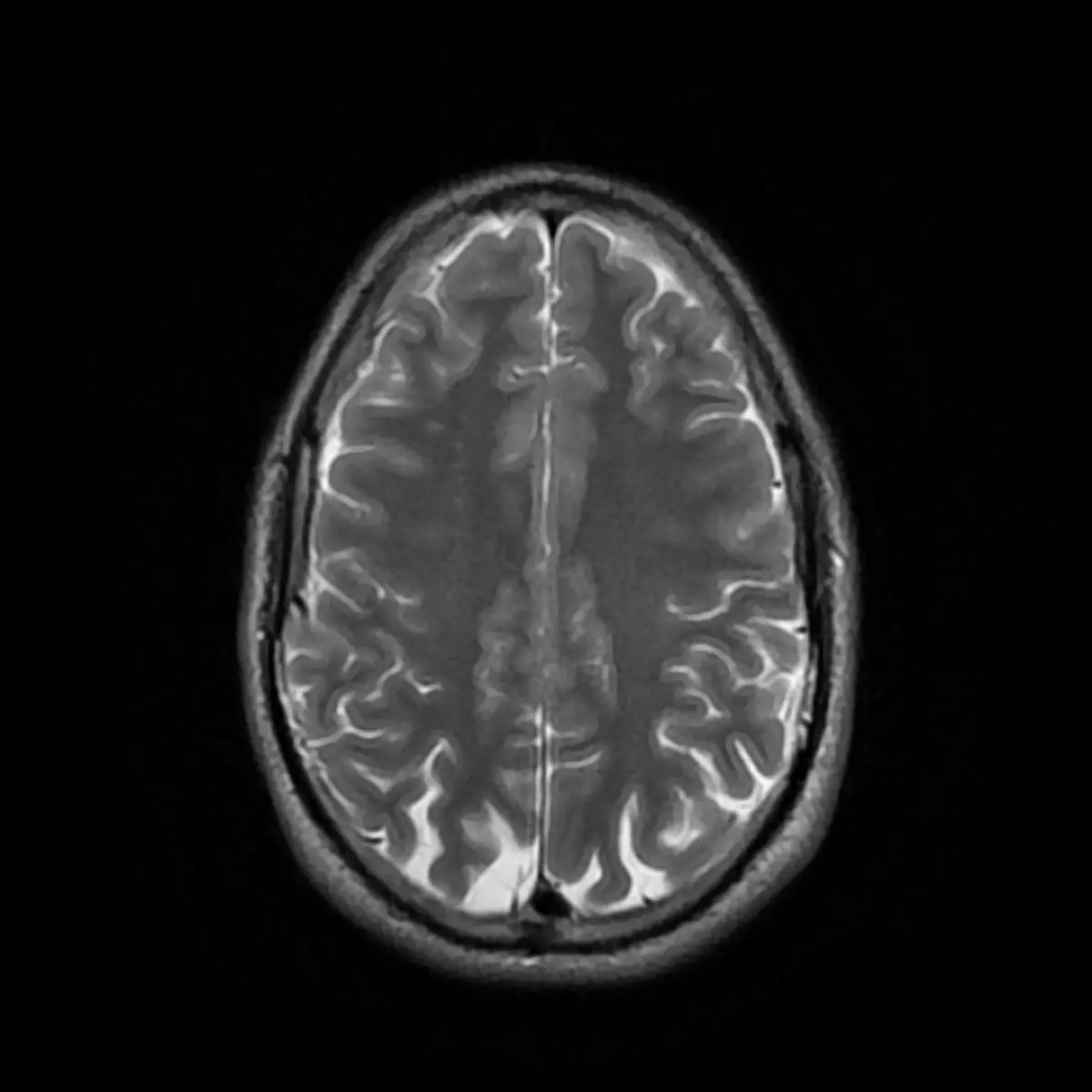
Seeing the phrase "prominent CSF spaces", or "prominent ventricles and sulci", on a brain MRI or CT report can send anyone straight to a worried internet search, especially if the next word that comes to mind is "atrophy". The reassuring truth is that in most people, prominent CSF spaces are a description of normal anatomy, very often a normal part of getting older, rather than a sign that something is wrong. Here is what the phrase actually means, what causes it, when it is simply age-appropriate, and the smaller number of situations where it deserves a closer look.
What are "prominent CSF spaces"?
Cerebrospinal fluid, or CSF, is the clear fluid that cushions the brain and spinal cord. It fills a set of spaces inside and around the brain, and part of a radiologist's job is to note how roomy those spaces appear. When a report calls them "prominent", "widened", or "enlarged", it simply means the fluid spaces look a little more spacious than they would in a young, healthy adult.
Radiologists are usually describing one or more of three places:
- The ventricles, fluid-filled chambers deep inside the brain
- The cortical sulci, the grooves on the folded surface of the brain
- The subarachnoid or extra-axial spaces, the thin fluid layer between the brain and the skull
Because the skull is a fixed box, the space taken up by fluid and the space taken up by brain tissue trade off against each other. If the brain tissue occupies slightly less volume, which happens gradually and normally with age, the CSF spaces naturally look more prominent to fill the difference. On the images this shows up as slightly wider grooves or slightly larger ventricles, and it is one of the most common descriptive findings on adult brain imaging.
What causes prominent CSF spaces?
There is a wide range of reasons, and most of them are benign. The job of the report, and of your doctor, is to place the finding in context rather than treat the phrase as a verdict.
- Normal variation, some people simply have roomier CSF spaces, the same way head shapes and sizes differ
- Age-related volume change, the brain gradually occupies a little less space with age, so prominent spaces are expected and normal in older adults
- Benign enlargement in infants, in babies, prominent spaces around the brain are often a well-known, self-resolving pattern (more on this below)
- Volume loss beyond what is expected for age, which in some people reflects a neurodegenerative process, but that is a clinical diagnosis, not something a single scan line can confirm
- Long-standing vascular changes, such as high blood pressure and chronic small-vessel changes, which can contribute to volume loss over time
- Fluid building up under pressure (hydrocephalus), a less common but important cause covered in the next section
Is it serious?
For the large majority of people, prominent CSF spaces are an incidental, age-appropriate finding that changes nothing about their health. Radiologists see them constantly, and on their own they are not a diagnosis. What matters is the pattern of the finding and the clinical picture around it.
The finding earns more attention when the ventricles look enlarged out of proportion to the surface grooves. That pattern can point toward hydrocephalus, fluid accumulating under pressure rather than tissue simply occupying less space, including a form called normal pressure hydrocephalus that mostly affects older adults and is, importantly, potentially treatable. A radiologist who sees this will usually say so directly and suggest the next step.
It also matters when the degree of volume loss is clearly more than expected for someone's age, or when a follow-up scan shows a meaningful change over time. When the volume loss is described as beyond what is expected for age, the report may use the word atrophy, which we cover separately. Even then, imaging is only one piece, the interpretation depends on symptoms, examination, and history, which is why your own doctor's read of the whole picture counts for far more than the phrase alone.
Prominent CSF spaces in babies and children
Parents often meet this phrase when an infant has a larger-than-average head and gets a scan. In many of these babies the finding is benign enlargement of the subarachnoid spaces, sometimes shortened to BESS, a common, harmless pattern in which the fluid layer over the brain is a little roomy. It typically appears in the first months of life, is often familial (a parent may have had a big head as a baby too), and usually resolves on its own by around two years of age as the child grows.
Pediatricians tend to follow it by tracking head circumference on a growth chart and watching development, rather than by repeating scans. The great majority of children with this pattern develop completely normally. As always, a pediatrician who knows the child is the right person to decide whether any further checks are needed.
What symptoms can go with it?
On its own, prominent CSF spaces usually cause no symptoms at all, which is exactly why the finding is so often a surprise on a scan done for an unrelated reason such as headaches or dizziness. When symptoms do line up with the imaging, the pattern of symptoms matters more than the wording on the report.
The one combination worth knowing is the picture linked with normal pressure hydrocephalus: a gradually worsening, unsteady or "magnetic" walk, changes in thinking or memory, and reduced bladder control. These symptoms have many possible causes and are common in older age generally, so they are not proof of anything by themselves, but together with enlarged ventricles they are something doctors specifically look into, partly because treatment can help. You can read a plain-language overview from the National Institute of Neurological Disorders and Stroke.
How is it evaluated and followed up?
Because prominent CSF spaces are a description rather than a diagnosis, the next step is almost always clinical correlation rather than immediate treatment. Your doctor combines the images with your age, symptoms, examination, and history to decide whether the finding is simply age-appropriate or worth exploring.
In practice that can mean nothing more than reassurance, or it can mean a neurology review, a gait or memory assessment, and sometimes a follow-up scan months later for comparison. That comparison is valuable: a stable picture is reassuring, while a clear change over time tells your doctor more than any single report can.
Can it be treated?
In most cases there is nothing to treat, because prominent CSF spaces are a normal or age-related finding rather than a disease. The honest answer for the majority of people is that no treatment is needed and no medication changes it.
The main exception is when the spaces are prominent because of fluid under pressure. Normal pressure hydrocephalus, once it is confirmed by the full clinical picture, can sometimes be improved by draining excess CSF with a shunt, which is why doctors take that particular pattern seriously. And where volume loss is being nudged along by vascular risk factors, managing blood pressure, blood sugar, cholesterol, and smoking supports long-term brain health, not to reverse a scan, but to protect what matters going forward.
Why a second read can help
A line like "prominent CSF spaces" sits right on the border between completely normal and occasionally meaningful, and that ambiguity is exactly what makes it stressful to read. The distinction that actually matters, age-appropriate roominess versus ventricles enlarged out of proportion, or a stable picture versus a changing one, comes down to careful interpretation. If you would like another qualified radiologist to look at the same images, DocOrbit offers an expert second read of your scan that you can share with your own doctor. Having a specialist confirm that a finding is age-appropriate can be genuinely reassuring, and it fits naturally into the value of a second radiological opinion whenever a report leaves you with questions.
Do prominent CSF spaces mean my brain is shrinking?
Not necessarily. Prominent CSF spaces describe how roomy the fluid spaces look, and in most people they reflect normal anatomy or the normal, gradual volume changes of aging rather than a disease. Only sometimes do they reflect volume loss beyond what is expected for age, and even then the images have to be read alongside your symptoms, examination, and history. Your doctor interprets the finding in that full context.
Are prominent CSF spaces normal?
Very often, yes. Roomier CSF spaces are one of the most common descriptive findings on brain imaging, especially as people get older, and on their own they are not a diagnosis. What a radiologist weighs is whether the spaces are simply age-appropriate or enlarged in a pattern that deserves a closer look.
Are prominent CSF spaces in a baby something to worry about?
Usually not. In infants, prominent spaces around the brain are frequently a benign, self-resolving pattern known as benign enlargement of the subarachnoid spaces, which is often familial and tends to settle by about age two. Pediatricians monitor it by tracking head size and development rather than by repeating scans. A pediatrician who knows your child is the right person to confirm that everything is on track.
Can prominent CSF spaces cause symptoms?
On their own they usually cause no symptoms, which is why they are so often found by chance on a scan done for another reason. The main exception is when the ventricles are enlarged out of proportion, which can be linked with normal pressure hydrocephalus, a specific combination of an unsteady walk, changes in thinking, and reduced bladder control that doctors look into because it can sometimes be treated.
Do prominent CSF spaces get worse over time?
Often they stay stable or change only slowly in step with normal aging. Because a single scan is just a snapshot, a follow-up study some months later is the clearest way to tell whether the picture is stable or genuinely changing, and a stable picture is reassuring. Your doctor decides whether any follow-up imaging is useful based on your symptoms and history.
Key takeaways
- Prominent CSF spaces describe roomy fluid spaces around and inside the brain, a description, not a diagnosis
- In adults they are very often normal and age-appropriate; in babies they are frequently a benign, self-resolving pattern
- The finding earns more attention when the ventricles look enlarged out of proportion, which can point to treatable hydrocephalus
- On their own they usually cause no symptoms; interpretation always depends on the clinical picture
- A comparison scan over time, and a second expert read, can turn an ambiguous line into a clear answer
If the rest of your report reads like another language, our free radiology report explainer rewrites it in everyday words, defines the terms it uses and suggests what to ask at your next appointment.
Can I get a second opinion on my MRI online?
Yes. Online radiology second opinions run entirely from home: you upload your images, with no CD to post and no second trip, and a subspecialist radiologist re-reads the study and writes a structured report you can give to your own doctor. DocOrbit returns that signed second read in 24 to 48 hours. You can then message the radiologist with questions about the MRI and about what the report actually means for you.
This article is for general information only and is not medical advice. Always discuss your imaging results and any next steps with a qualified physician.