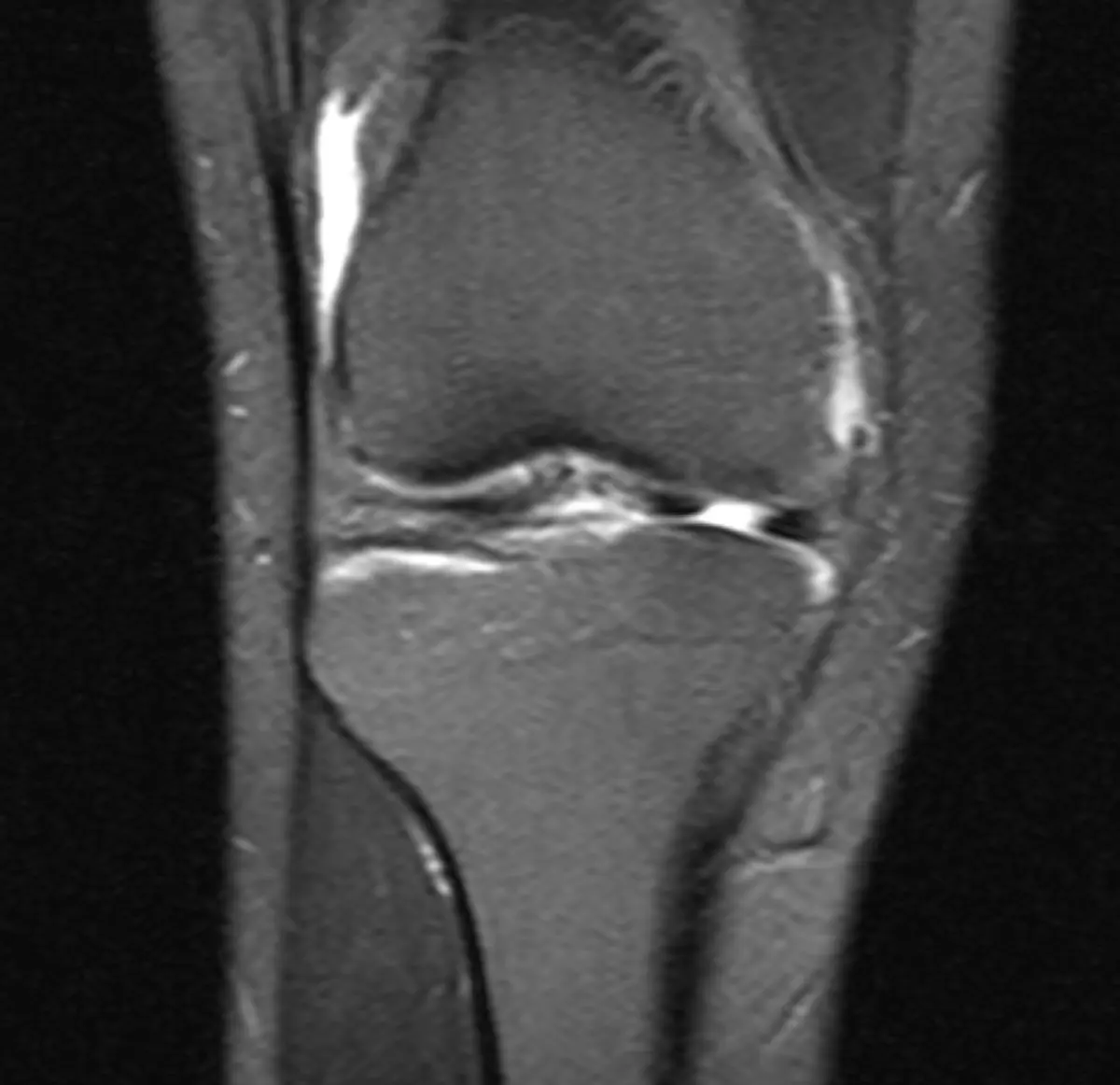
Seeing the words "meniscal tear" on a knee MRI report can be unsettling, especially if you were hoping the scan would explain a nagging pain without finding anything wrong. Here is the reassuring truth: meniscal tears are one of the most common findings in knee imaging, they show up on the scans of plenty of people who feel fine, and the large majority are managed well without surgery. This article explains what the finding means, why these tears happen, and what usually comes next.
What does "meniscal tear" mean?
Each knee has two menisci, tough, C-shaped pads of cartilage that sit between the thighbone (femur) and the shinbone (tibia). There is one on the inner side of the knee (the medial meniscus) and one on the outer side (the lateral meniscus). They act as shock absorbers and spacers, spreading load across the joint and helping the knee glide smoothly.
A meniscal tear is a split or fissure in one of these cushions. On MRI, a radiologist sees it as a bright line of signal running through the dark, wedge-shaped cartilage and reaching its surface. Your report may describe the tear with a particular pattern, and those words simply tell the surgeon how the cartilage is split:
- Horizontal or degenerative, the cartilage splits within its layers, most often from age-related wear
- Radial, the tear runs from the inner edge outward, across the fibers
- Bucket-handle, a longer fragment flips into the joint and can cause true locking
- Complex, more than one tear pattern is present together
Common causes
Meniscal tears fall into two broad groups, and which one you have shapes what happens next:
- Acute (traumatic) tears, usually from a twisting or pivoting movement, a sudden deep squat, or a sports injury. These are more common in younger, active people, and may happen alongside a ligament injury.
- Degenerative tears, the cartilage gradually frays and weakens with age, so a tear can appear with no specific injury at all, sometimes after something as ordinary as standing up from a low chair. These are extremely common after the age of 40 and often go hand in hand with early wear-and-tear changes elsewhere in the joint.
Is it serious?
For most people, a meniscal tear is not an emergency and not a sign of something dangerous. Degenerative tears in particular are so common that imaging studies routinely find them in the knees of people who have no pain whatsoever, which is exactly why the finding has to be read alongside your symptoms, not on its own.
The situations doctors take more seriously are mechanical ones: a knee that truly locks and will not fully straighten, that gives way unexpectedly, or that swells significantly after an injury. A bucket-handle tear, where a fragment of cartilage displaces into the joint, is the classic cause of genuine locking and tends to prompt quicker evaluation.
What symptoms go with a meniscal tear?
Some people have a torn meniscus and never know it. When symptoms do occur, the common ones are:
- Pain along the inner or outer joint line of the knee, often worse with twisting or squatting
- Swelling that builds over a day or two rather than instantly
- A catching, clicking, or "giving way" sensation
- In some cases, the knee locking in a bent position
The intensity of symptoms does not always match the size of the tear on the scan. A small tear can be sore while a larger degenerative one stays quiet, which is why the clinical picture matters more than the MRI alone.
How is it diagnosed and followed up?
Diagnosis starts with the story and a physical exam, your doctor will ask how the pain began and may gently rotate and bend the knee to reproduce it. MRI is the main imaging test because it shows the soft cartilage that X-rays cannot. The key step is correlation: a tear seen on the scan only explains your knee if it lines up with where you hurt and how the knee behaves. Many findings on imaging are incidental, the same way a herniated disc can quietly appear on a back scan, which is why a careful read in context is so important.
Treatment options
For the large majority of meniscal tears, the first line of treatment is conservative and non-surgical:
- Relative rest and a short period of activity modification
- A structured physical therapy program to rebuild strength around the knee, especially the quadriceps
- Anti-inflammatory measures such as ice and, when appropriate, medication
- Occasionally a corticosteroid injection to settle a flare
For degenerative tears in particular, good-quality trials have shown that supervised physical therapy often produces results comparable to arthroscopic surgery, with fewer risks. Surgery, usually a keyhole arthroscopy, is generally reserved for tears that cause true mechanical locking, certain repairable tears in younger patients, or knees that have not improved after a fair trial of conservative care. When surgery is needed, the surgeon either trims the damaged piece or repairs the tear, depending on its pattern and location.
Lifestyle steps that help
Whether or not you ever need a procedure, a few habits protect the knee and ease symptoms: keeping the muscles around the knee and hip strong, maintaining a healthy weight to reduce load on the joint, choosing lower-impact activities like cycling and swimming during flares, and warming up before sport. None of these reverse a tear, but they consistently improve how the knee feels and functions.
Why a second read can help
Knee MRIs are detailed, and the same scan can be described in more than one way, a tear that looks like it needs surgery to one reader may be a stable, incidental finding to another, and that difference can change whether you head for an operating room or a physical therapy gym. An expert second read, like the one DocOrbit provides, gives you a careful independent interpretation you can share with your own orthopedic surgeon before committing to a plan. If you are weighing your options, our guide on when to get a second radiological opinion walks through the situations where it adds the most value.
Does a meniscus tear always need surgery?
No. Most meniscal tears, especially degenerative ones, are managed without surgery. Physical therapy, activity changes, and time settle the symptoms for the large majority of people. Surgery is usually reserved for tears that cause true mechanical locking or that do not improve after a fair trial of conservative care.
Can a meniscus tear heal on its own?
It depends on where the tear is. The outer third of the meniscus has a blood supply and can sometimes heal, while the inner two-thirds has little blood flow and rarely knits back together. Even when the tear itself does not fully heal, the pain and swelling around it often calm down over weeks to months.
Is it safe to walk with a meniscus tear?
For most people, yes. Walking and gentle daily activity are generally encouraged unless the knee is truly locking, giving way, or too painful to bear weight. If your knee catches and will not fully straighten, that is worth prompt medical attention.
How long does it take to recover from a meniscus tear?
With conservative treatment, many people feel meaningfully better within six to eight weeks of focused physical therapy. Recovery after arthroscopic surgery varies: a simple trim often allows a return to normal activity within a few weeks, while a meniscus repair protects the healing tissue and can take several months.
Key takeaways
- A meniscal tear is a split in one of the knee's cartilage cushions, extremely common, and often found in knees that feel fine.
- Tears are either traumatic (a twist or sports injury) or degenerative (age-related wear with no clear injury).
- The finding has to be read alongside your symptoms; true locking, giving way, or significant swelling are what prompt closer attention.
- Most tears improve with physical therapy and time; surgery is reserved for specific situations.
Still unsure what the rest of your report says? Paste it into our free radiology report explainer and read it back in plain English, with each medical term defined and a short list of questions worth asking your doctor.
How do I have my MRI reviewed by another radiologist online?
Yes. Online radiology second opinions run entirely from home: you upload your images, with no CD to post and no second trip, and a subspecialist radiologist re-reads the study and writes a structured report you can give to your own doctor. DocOrbit returns that signed second read in 24 to 48 hours. You can then message the radiologist with questions about the MRI and about what the report actually means for you.
This article is for general information only and is not medical advice. Always discuss your imaging results and any next steps with a qualified physician.