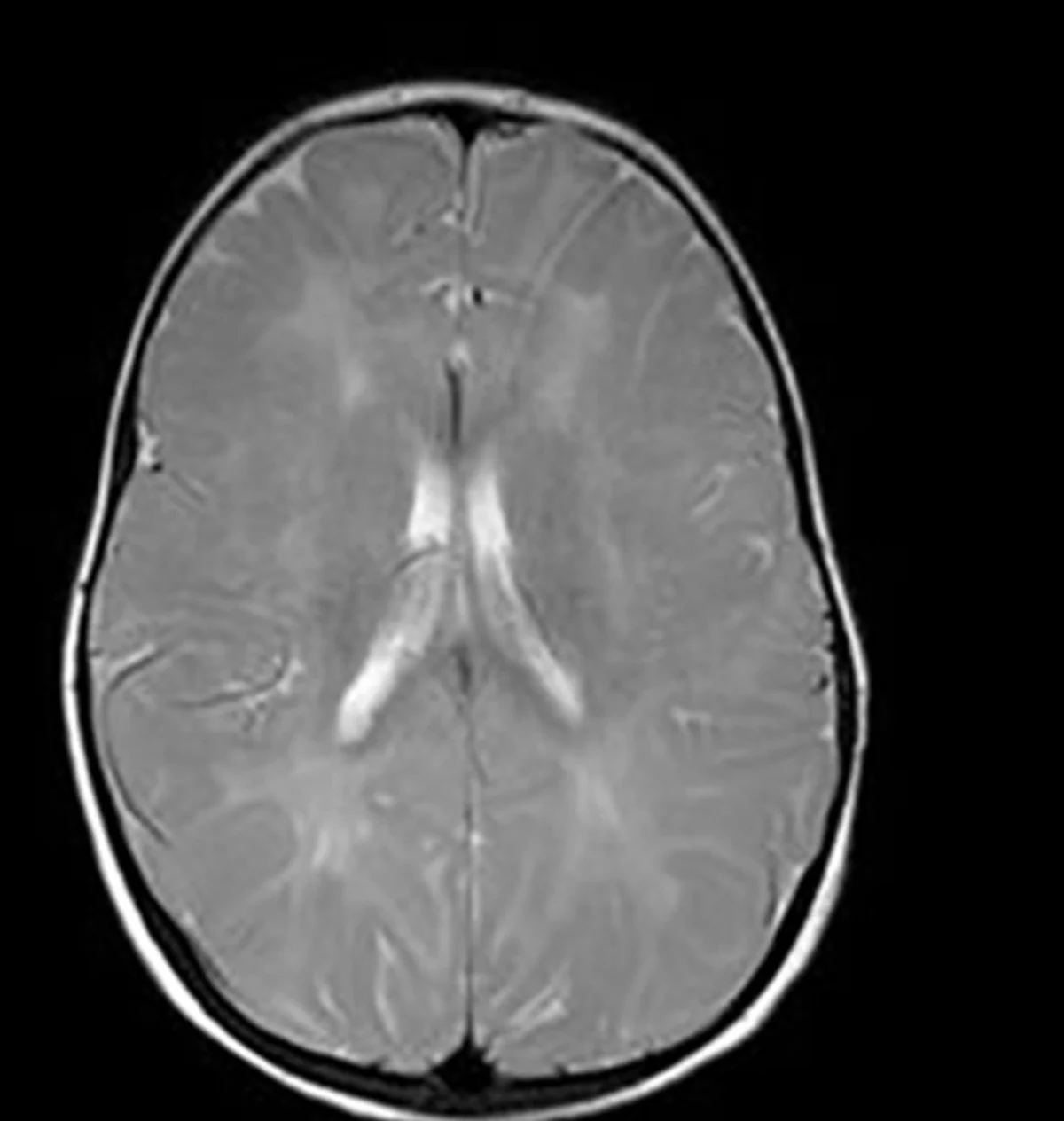
If your brain MRI report mentions "gliotic changes," "gliosis," or "gliotic scarring," it is natural to assume the worst. In most people, though, this finding is the imaging equivalent of an old scar. It is a mark left behind by something that has already healed, not an active problem. This guide explains what radiologists mean by gliosis, what tends to cause it, when it is simply an incidental finding, and when it deserves a closer look.
What "gliotic changes" means
Gliosis is the brain's version of scar tissue. When brain tissue is injured by a lack of blood flow, trauma, inflammation, or infection, supporting cells called glial cells (mainly astrocytes) move in to clean up and seal off the damaged area. The dense network they leave behind is called gliosis, and on MRI it shows up as a bright patch on FLAIR and T2-weighted sequences.
Radiologists describe gliotic changes by a few key features:
- Signal: bright (hyperintense) on FLAIR and T2, often with no abnormal enhancement after contrast, which fits old, inactive scarring.
- Location: frequently near a region that was previously injured, such as the territory of an old stroke, the edge of a surgical site, or the deep white matter.
- Associated volume loss: older scars sometimes pull on nearby tissue, producing local shrinkage or a slightly enlarged adjacent ventricle.
Reports may use related phrases such as "encephalomalacia and gliosis," "gliotic focus," "post-ischemic gliosis," or "gliotic scarring," all pointing to the same underlying idea of healed tissue.
Common causes
Gliosis is not a disease in itself. It is the footprint of a past event. The most common causes include:
- Prior stroke or small vessel disease: by far the most common reason in older adults. Old infarcts and chronic reduced blood flow both leave gliotic marks.
- Head trauma: a previous concussion or more serious injury can leave a gliotic scar where the brain was bruised.
- Past infection or inflammation: meningitis, encephalitis, or an abscess that has healed.
- Surgery: gliosis routinely forms at the margins of a previous brain operation.
- Demyelinating disease: long-standing multiple sclerosis lesions can develop a gliotic component over time.
- Seizure-related changes: gliosis in the temporal lobe (mesial temporal sclerosis) is a recognized association with certain epilepsies.
Because vascular causes dominate, gliotic foci are often mentioned alongside chronic ischemic changes or an old lacunar infarct. The combination usually reflects long-term blood-vessel health rather than anything sudden.
Is it serious?
For most people the honest answer is "the scar itself is not the problem." Gliosis marks damage that has already occurred and stabilized. What carries clinical weight is the cause behind it and whether the underlying process is still active. A few useful distinctions:
- A small, isolated gliotic focus found incidentally, say during a scan done for headaches, is usually nothing to act on beyond addressing risk factors.
- Multiple gliotic areas in a vascular pattern point toward small vessel disease, which is worth managing to protect future brain health.
- Gliosis accompanied by new or progressive neurological symptoms deserves a focused evaluation. In that situation it is the symptoms, not the scar, that guide the workup.
The reassuring part is that gliosis, being a scar, is expected to stay put. Stability on a follow-up MRI is one of the clearest signals that nothing active is going on.
Symptoms
Gliotic changes themselves are often completely silent and are discovered by chance. When symptoms do occur, they reflect the original injury and its location rather than the scar tissue, and may include:
- Weakness or numbness on one side, often a residue of an old stroke.
- Subtle memory or thinking changes when small vessel disease is widespread.
- Seizures, particularly with gliosis in the temporal lobe.
- Localized deficits in speech, vision, or coordination, matching the region that was injured.
Many people with scattered gliotic foci have no symptoms at all, which is exactly why the finding is so often incidental.
How it is diagnosed and followed up
Gliosis is usually identified on the same MRI that prompted the report. The next steps depend on the clinical picture:
- Reviewing the history: a known prior stroke, surgery, or head injury often explains the finding immediately.
- Contrast imaging: true gliosis typically does not enhance, so enhancement prompts a closer look to exclude active processes.
- Follow-up MRI: when the cause is unclear or a tumor needs to be excluded, a repeat scan in several months confirms stability.
- Vascular risk assessment: blood pressure, cholesterol, blood sugar, and lifestyle review when the pattern looks vascular.
Most cases need nothing more than reassurance and attention to risk factors. The decision rests with your physician, who can match the imaging to your symptoms and history.
Lifestyle changes
You cannot reverse an existing scar. What you can do is protect the brain from forming new ones, and that matters most when the cause is vascular:
- Control blood pressure, the single most important factor for small vessel health.
- Manage cholesterol and blood sugar with your doctor's guidance.
- Stop smoking and keep alcohol moderate.
- Stay physically active and follow a heart-healthy, Mediterranean-style diet.
- Prioritize good sleep and treat conditions like sleep apnea.
Why a second read can help
Telling benign, stable gliosis apart from a mimic such as an active demyelinating lesion, a low-grade tumor, or inflammatory change depends on careful interpretation of signal, shape, and contrast behavior. A second read can confirm that a gliotic focus is truly an old scar rather than something that needs further workup. DocOrbit provides an expert second-opinion radiology report you can share with your own doctor. It is most helpful when a report is ambiguous, when gliosis sits next to a region of concern, or when you simply want confidence that a neurological diagnosis is on solid ground.
Are gliotic changes on MRI serious?
In most cases gliotic changes are old, stable scars that are not dangerous in themselves. They are a record of something that already happened, not an active disease. What matters is the cause behind them and whether you have symptoms. A small area of gliosis with no symptoms is usually an incidental finding; widespread gliosis or gliosis with new neurological symptoms deserves a closer look by a neurologist.
Can gliosis go away or heal?
Gliosis is essentially scar tissue in the brain, so it generally does not disappear the way a bruise fades. Once glial cells have replaced injured tissue, the change tends to stay visible on MRI for life. The good news is that stable gliosis on a follow-up scan is reassuring: it tells you the underlying injury is not active and is not spreading.
What causes gliotic changes in the brain?
Gliosis is the brain's healing response to almost any past injury. Common causes include a prior stroke or small vessel disease, head trauma, previous infection or inflammation, surgery, and demyelinating disease such as multiple sclerosis. In older adults, scattered gliotic foci are frequently linked to long-standing high blood pressure and other vascular risk factors.
Is gliosis the same as a brain tumor?
No. Gliosis is scar tissue, while a tumor is an abnormal growth of cells. They can occasionally look similar on a single scan, which is why radiologists weigh the shape, location, contrast behavior, and your history. When there is any doubt, a follow-up MRI or contrast study usually settles the question, because true gliosis stays stable over time while a tumor tends to change.
Key takeaways
- Gliotic changes are the brain's scar tissue: a mark of a past injury, not an active disease in themselves.
- The most common cause is vascular: old strokes and small vessel disease, alongside trauma, infection, surgery, and demyelination.
- Isolated gliosis with no symptoms is usually incidental; what matters is the underlying cause and whether it is still active.
- Stable gliosis on follow-up is reassuring, and controlling vascular risk factors helps prevent new scarring.
This article is for general information only and is not medical advice. Always discuss your imaging results and any next steps with a qualified physician.