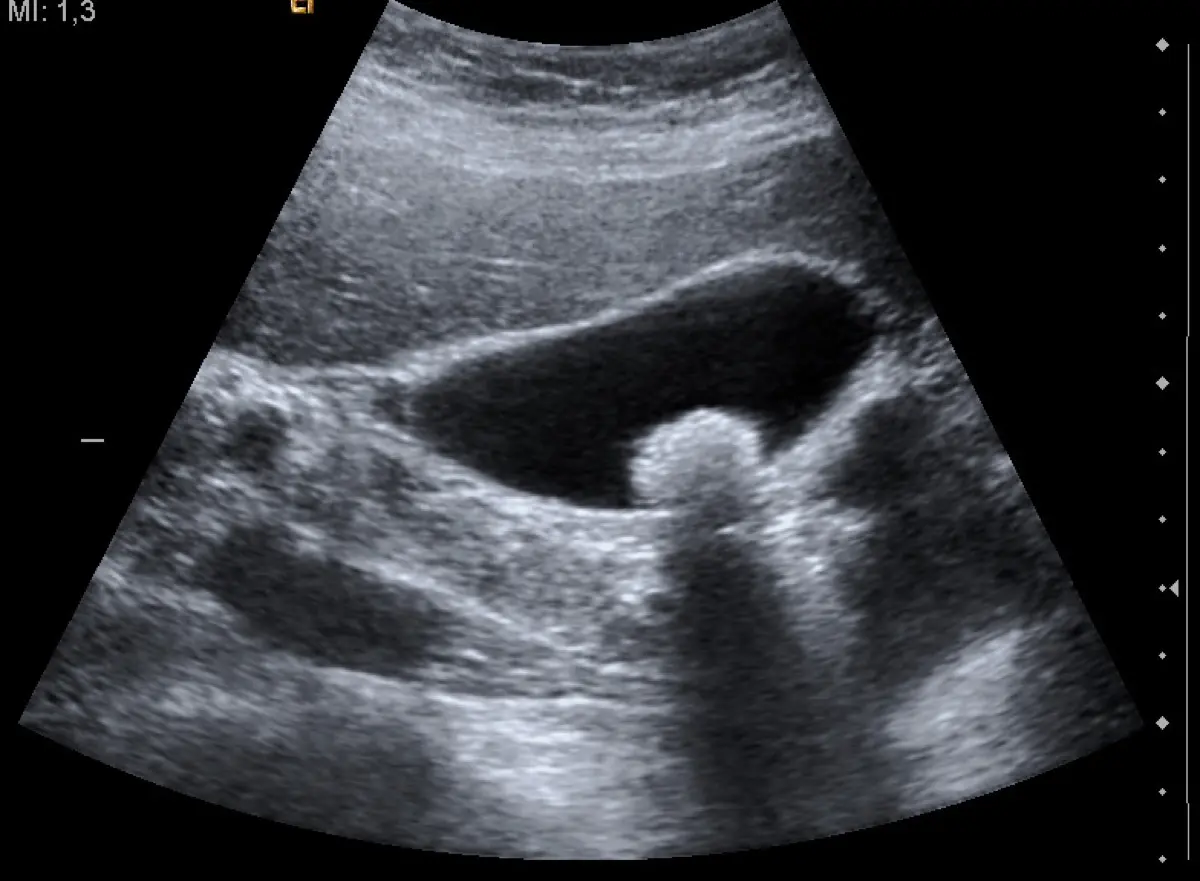
Seeing "gallstones" or "cholelithiasis" on an ultrasound report can be unsettling, especially if you went in for vague stomach discomfort and came out with a finding you didn't expect. Here is the reassuring starting point: gallstones are extremely common, the large majority never cause any trouble, and many people carry them for years without knowing. This article explains what the radiologist actually saw, why stones form, when they matter, and what treatment does, and does not, involve.
What does "gallstones" mean?
The gallbladder is a small, pear-shaped pouch tucked under the liver. It stores bile, the fluid your liver makes to help digest fat, and squeezes it into the intestine after meals. Gallstones are hardened deposits that form inside this pouch when the chemistry of bile gets out of balance. They range from a single stone the size of a pea to dozens of tiny ones, or a gritty mix called sludge.
Ultrasound is the first and best test for finding them. On the screen, a stone shows up as a bright (echogenic) spot that casts a dark "shadow" behind it and moves when you change position. That shadow is the giveaway radiologists look for, and it is why ultrasound catches stones that an X-ray or even a CT scan can miss.
- Cholesterol stones, the most common type, formed when bile holds more cholesterol than it can dissolve.
- Pigment stones, darker stones made of bilirubin, more common in certain blood and liver conditions.
- Sludge, a thick, sandy precursor that can clear on its own or go on to form stones.
Common causes and risk factors
Gallstones form when bile contains too much cholesterol or bilirubin, or when the gallbladder doesn't empty as well as it should. Several things nudge the odds upward, though having them does not mean you will get stones:
- Being female, especially during the childbearing years, estrogen raises cholesterol in bile.
- Pregnancy, and use of estrogen-containing medications.
- Being over 40, and a family history of gallstones.
- Carrying extra weight, or losing weight very rapidly (including after bariatric surgery).
- Diabetes and certain blood disorders.
None of these are a verdict. Plenty of people with every risk factor never form a stone, and plenty without any do. The finding on your report is a snapshot of your gallbladder today, not a prediction.
Are they serious?
For most people, no. Stones that sit quietly and cause no symptoms are called "silent" gallstones, and the standard advice is simply to leave them alone. The concern is not the stones themselves but the small chance that one moves and blocks the narrow duct draining the gallbladder. When that happens it can lead to a painful inflammation (cholecystitis), or, if a stone slips into the main bile duct, to jaundice or an inflamed pancreas (pancreatitis).
These complications are the kind of thing doctors take seriously and treat promptly, but they usually announce themselves clearly with severe pain, fever, or yellowing of the skin and eyes. A stone found by chance on a scan you had for another reason rarely needs urgent action.
Symptoms
Many people have no symptoms at all. When stones do speak up, the classic pattern is "biliary colic": a steady, building pain in the upper right or middle of the abdomen, often after a fatty meal, sometimes spreading to the right shoulder blade. It can last from several minutes to a few hours and then ease.
Symptoms that deserve prompt medical attention include pain that lasts more than a few hours, fever or chills, nausea and vomiting, or yellowing of the eyes or skin. These suggest a stone may be causing a blockage rather than just sitting in place.
How are gallstones diagnosed and followed up?
Ultrasound is the workhorse, quick, radiation-free, and very accurate for stones in the gallbladder itself. If the picture is unclear or a duct stone is suspected, doctors may add an MRCP (a specialized MRI of the bile ducts) or a HIDA scan to see how well the gallbladder is emptying. Blood tests for liver and pancreas enzymes round out the assessment when symptoms are present.
Silent stones usually need no routine follow-up imaging at all. As with other common incidental findings such as a renal cyst or a hepatic hemangioma, the right next step depends far more on your symptoms than on the appearance of the finding alone.
Treatment options
Treatment is matched to whether the stones cause trouble:
- Watchful waiting, for silent stones, doing nothing is usually the correct, evidence-based answer.
- Surgery (cholecystectomy), removing the gallbladder, almost always keyhole (laparoscopic), is the standard fix for stones that cause repeated pain or a complication. It is one of the most common operations performed worldwide.
- Medication, bile-acid pills can slowly dissolve certain small cholesterol stones in selected patients who cannot have surgery, but it is slow and stones often return.
You can live a full, normal life without a gallbladder. The liver keeps making bile; it simply flows more steadily into the intestine.
Lifestyle changes that help
Lifestyle steps won't dissolve stones you already have, but they can lower the chance of new ones and ease symptoms while you decide on treatment: keep weight steady and avoid crash diets, favor fiber and healthy fats over fried and very fatty foods, stay active, and eat regular meals rather than long fasts followed by a large dinner. If you are losing weight intentionally, a gradual pace is gentler on the gallbladder than a rapid one.
Why a second read can help
Most gallbladder ultrasounds are straightforward, but the decision that follows, watch and wait, or remove the gallbladder, depends on reading the images together with your symptoms, and that is where opinions can differ. If your report is borderline, mentions a thickened gallbladder wall or a "polyp," or simply leaves you unsure, an expert second read can confirm what is there and help you ask your doctor the right questions. DocOrbit offers a fast, independent radiology second opinion you can share directly with your physician, useful any time you want another careful look before a decision. You can read more about when a second radiological opinion is worth it.
Are gallstones dangerous?
Most gallstones never cause a problem. The concern is not the stones sitting quietly in the gallbladder but the complications that can follow if one blocks a duct: inflammation of the gallbladder, jaundice, or pancreatitis. These are the situations doctors act on, and they usually announce themselves with pain, fever, or yellowing of the skin or eyes.
Do gallstones always need surgery?
No. Stones found by chance that have never caused symptoms are usually just left alone and watched. Surgery to remove the gallbladder is generally recommended when stones cause repeated pain attacks or a complication. Your surgeon weighs your symptoms, age, and overall health before suggesting it.
Can gallstones go away on their own?
True gallstones rarely dissolve by themselves. Tiny stones and sludge can sometimes pass or clear, and certain cholesterol stones can be slowly dissolved with medication in selected cases, but this is uncommon and slow. For most people the stones stay put unless the gallbladder is removed.
What foods trigger gallstone pain?
Large, fatty, or fried meals are the classic triggers because fat tells the gallbladder to squeeze, and that squeeze against a stone is what hurts. Many people notice pain a half hour to an hour after eating. Smaller, lower-fat meals often reduce attacks while you wait for treatment, but they do not get rid of the stones.
Can you live without a gallbladder?
Yes. The gallbladder stores bile, but the liver keeps making bile after the gallbladder is removed, and it simply flows into the intestine more continuously. Most people eat normally within a few weeks. A minority notice looser stools or sensitivity to very fatty meals, which usually settles with time.
Key takeaways
- Gallstones are very common, and most are silent and harmless.
- Ultrasound is the best test, stones show as a bright spot with a shadow behind them.
- Silent stones are usually just watched; surgery is for stones that cause pain or complications.
- Severe pain, fever, or yellowing of the skin or eyes deserves prompt medical attention.
- Life without a gallbladder is normal for the large majority of people.
If the rest of your report reads like another language, our free radiology report explainer rewrites it in everyday words, defines the terms it uses and suggests what to ask at your next appointment.
Can I ask a radiologist about my ultrasound report online?
Yes. Online radiology second opinions run entirely from home: you upload your images, with no CD to post and no second trip, and a subspecialist radiologist re-reads the study and writes a structured report you can give to your own doctor. DocOrbit returns that signed second read in 24 to 48 hours. You can then message the radiologist with questions about the ultrasound and about what the report actually means for you.
This article is for general information only and is not medical advice. Always discuss your imaging results and any next steps with a qualified physician.